
Return on Investment for Passive House Upgrades in Australia: Cost vs Benefit
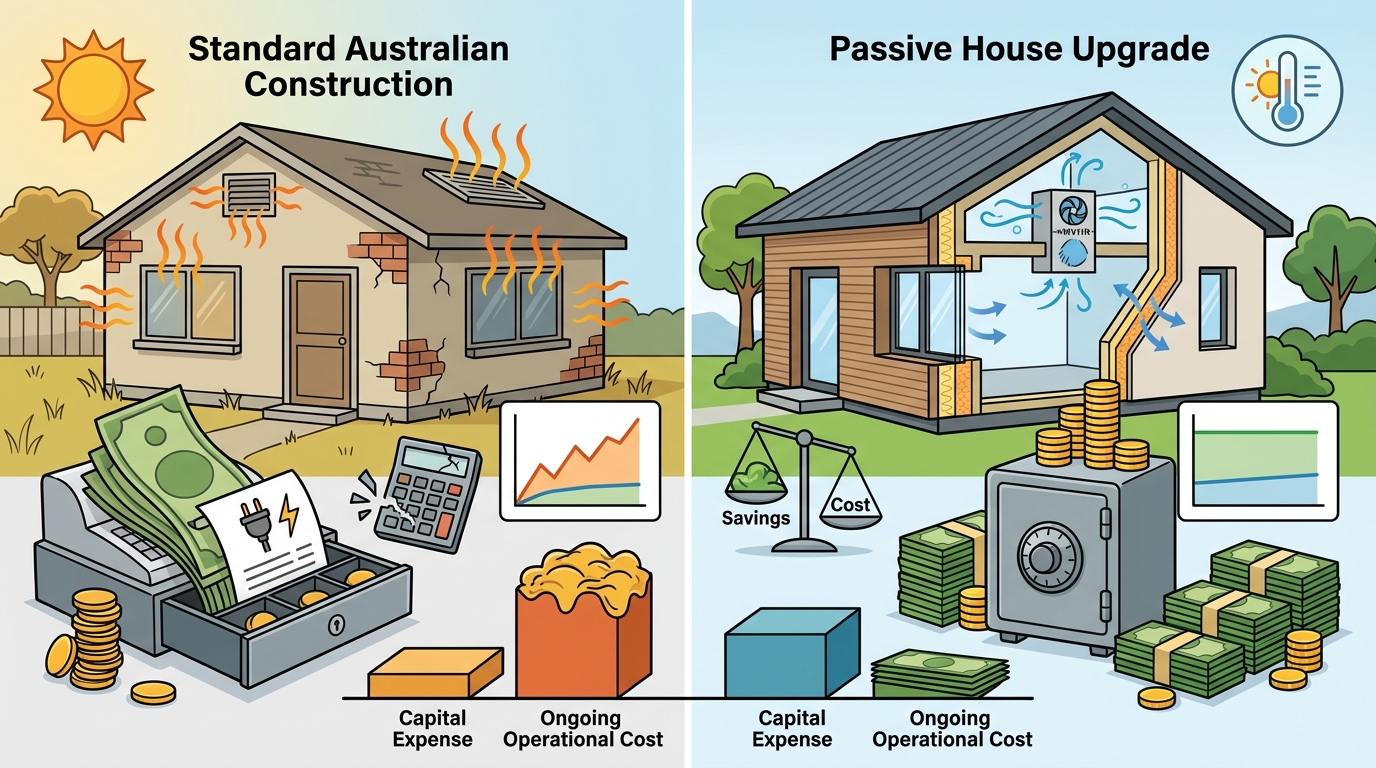
Homeowners across Australia are increasingly scrutinizing the financial viability of high-performance building standards. The Passive House standard, originally developed in Germany, has evolved into a rigorous global benchmark for energy efficiency. According to recent industry analyses, homes designed to Passive House principles can reduce heating and cooling energy demand by up to 90% compared to standard Australian construction. This dramatic reduction in energy consumption fundamentally alters the long-term economics of home ownership, shifting the focus from initial capital expenditure to lifetime operational savings.
Energy Savings and Operational Costs
The most immediate financial benefit of a Passive House upgrade is the drastic reduction in utility bills. Traditional Australian homes often struggle with thermal inefficiency, leading to heavy reliance on air conditioning and heating systems. Passive House design utilizes superior insulation, airtight construction, and high-performance glazing to maintain stable indoor temperatures regardless of external weather conditions.
Data indicates that the average Australian household spends a significant portion of its income on energy. By implementing Passive House principles, homeowners can slash these costs. The reimagined habitat team specializes in designing homes that not only meet but exceed these efficiency targets. The reduction in energy load also means that smaller, more efficient HVAC systems can be installed, further lowering initial equipment costs.
Furthermore, as energy prices in Australia continue to fluctuate and trend upward, the value of energy independence grows. A home that requires minimal energy to operate is insulated against future price hikes. This stability provides a predictable monthly budget for homeowners, a factor that financial advisors increasingly recommend for long-term wealth preservation.
Construction Cost Premiums
One of the primary concerns for homeowners is the upfront cost. It is a common misconception that Passive House construction is prohibitively expensive. While there is a premium for high-quality materials and specialized labor, the gap has narrowed significantly in recent years.
The cost premium for Passive House construction in Australia typically ranges from 5% to 10% over standard building costs, depending on the complexity of the design and the specific performance targets. However, this premium is offset by several factors. First, the reduced size of mechanical systems (HVAC) can save thousands of dollars. Second, the use of prefabricated components, as seen in the Net Zero Habitat range, can streamline construction timelines and reduce labor costs.
Additionally, government incentives and rebates for energy-efficient homes are becoming more prevalent across Australian states. These financial incentives can further reduce the net cost of the upgrade, making the return on investment timeline more attractive. Homeowners should consult with certified designers to identify applicable grants and rebates in their specific region.
Property Value and Marketability
High-performance homes are commanding higher prices in the Australian real estate market. As awareness of climate change and energy costs grows, buyers are actively seeking homes that offer lower running costs and greater comfort. A Passive House certified home is a distinct selling point that differentiates a property in a crowded market.
Studies in international markets have shown that certified energy-efficient homes sell faster and at a premium compared to non-certified counterparts. In Australia, this trend is accelerating. The durability and quality of construction associated with Passive House standards also mean lower maintenance costs over time, which is a key consideration for potential buyers.
The project portfolio of leading designers demonstrates that these homes are not just functional but aesthetically superior. The emphasis on natural light, healthy materials, and thoughtful spatial planning creates a living environment that is highly desirable. This desirability translates directly into increased asset value for the homeowner.
Comfort, Health, and Well-being
While financial metrics are crucial, the qualitative benefits of Passive House upgrades are equally significant. The airtight envelope of a Passive House prevents drafts and cold spots, ensuring a consistent temperature throughout the home. This level of comfort is difficult to achieve with standard construction methods.
Moreover, the use of mechanical ventilation with heat recovery (MVHR) systems ensures a constant supply of fresh, filtered air. This is particularly important in urban areas where air quality can be compromised by pollution and allergens. The efficient habitat approach prioritizes indoor air quality, reducing the risk of mold and dampness which are common in poorly ventilated homes.
Health benefits extend beyond air quality. The thermal mass and insulation properties of Passive House designs reduce noise pollution from outside, creating a quieter, more serene living environment. This reduction in stress and improvement in sleep quality contributes to overall well-being, a factor that is increasingly valued by homeowners.
The KETO Project Case Study
The KETO Project stands as a prime example of the financial and environmental benefits of Passive House design. This award-winning prefab home has won two national awards at the Design Matters National 2026 True Zero Carbon Challenge. The project demonstrates that it is possible to build a home that produces more energy than it uses.
The KETO Project achieves net zero carbon by 2048, beating the target by two years. It features 8+ NatHERS stars, indicating exceptional thermal performance. The home generates more energy across the year than it uses, thanks to its efficient design and solar integration. This case study proves that high-performance homes can be both financially viable and environmentally responsible.
The KETO Project also highlights the importance of material selection. By using carbon-storing timber and wood-fibre insulation, the home minimizes its embodied carbon. This approach not only reduces environmental impact but also ensures the longevity and health of the building materials. The KETO prefab home serves as a blueprint for future sustainable construction in Australia.
Standard vs Passive House Comparison
| Feature | Standard Australian Home | Passive House Upgrade |
|---|---|---|
| Heating/Cooling Energy | High (100% baseline) | Reduced by up to 90% |
| Airtightness | Variable (often leaky) | ≤0.6 air changes per hour |
| Indoor Air Quality | Dependent on ventilation | Constant filtered fresh air |
| Thermal Comfort | Fluctuating temperatures | Stable, consistent temps |
| Construction Cost | Baseline | 5-10% premium |
| Long-term Value | Standard depreciation | Higher resale value |
Key Takeaways
- Passive House upgrades can reduce heating and cooling energy demand by up to 90%.
- The construction cost premium is typically 5-10%, offset by lower HVAC costs and incentives.
- High-performance homes command higher resale values and sell faster in the Australian market.
- The KETO Project achieved net zero carbon by 2048, two years ahead of target.
- Improved indoor air quality and thermal comfort significantly enhance resident well-being.
- Prefabricated Passive House options, like the Net Zero Habitat range, offer cost-effective solutions.
- Government rebates for energy efficiency are increasingly available across Australian states.
Frequently Asked Questions
Is Passive House construction more expensive than standard building?
While there is a initial premium of 5-10%, this is often offset by reduced HVAC costs and long-term energy savings.
How much energy can a Passive House save?
Passive House designs can reduce heating and cooling energy demand by up to 90% compared to standard homes.
Are there government incentives for Passive House upgrades?
Yes, various state and federal incentives are available for energy-efficient homes, though eligibility varies by region.
What is the KETO Project?
The KETO Project is an award-winning prefab home that achieves net zero carbon by 2048.
Does Passive House design improve indoor air quality?
Yes, mechanical ventilation with heat recovery ensures a constant supply of filtered fresh air.
Can Passive House principles be applied to renovations?
Absolutely. Retrofitting existing homes with Passive House principles can significantly improve their performance.
How does Passive House handle Australian summers?
Designs incorporate shading and thermal mass strategies to keep homes cool without excessive energy use.
What is the lifespan of a Passive House?
Due to high-quality materials and construction, Passive Houses often have a longer lifespan than standard homes.
Start Your High-Performance Journey
Investing in a Passive House upgrade is not just about saving money; it is about securing a healthier, more comfortable, and sustainable future for your family. The financial returns are clear, and the qualitative benefits are immeasurable. Contact reimagined habitat today to schedule a free 30-minute design consultation. Discover how you can transform your home into a high-performance habitat that delivers exceptional value and comfort.