
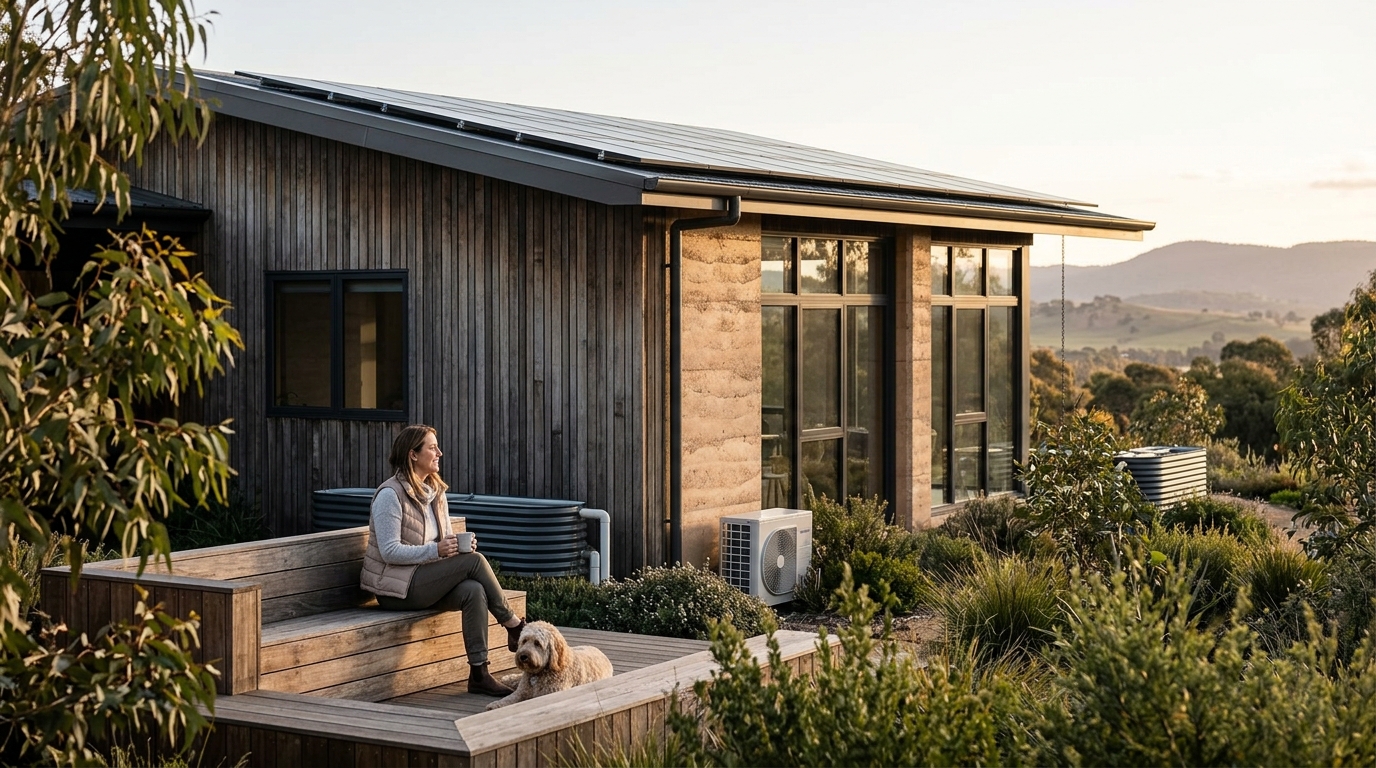
Canberra residents are increasingly turning to all-electric, net-zero homes to combat rising energy costs and meet strict sustainability targets. According to recent industry data, homes designed to Passive House standards can reduce heating and cooling energy demand by up to 90% compared to conventional construction. This dramatic reduction in energy load fundamentally alters the financial equation for homeowners, shifting the focus from ongoing utility bills to upfront capital investment. The following analysis examines the true cost-benefit landscape for building a high-performance, all-electric residence in the Australian Capital Territory. (Contact passive house designer)
Why Canberra Demands High-Performance Design
Canberra presents a unique architectural challenge. As Australia's only inland capital city, it experiences significant temperature fluctuations, with hot summers and cold winters. This climate variability places immense strain on traditional heating and cooling systems. Passive House is that global standard bearer for healthy, environmentally conscious homes, providing a framework that addresses these specific climatic stresses. (Correa Prefab Home Compact)
The Australian Capital Territory has set ambitious targets for carbon neutrality. To meet these goals, new construction must minimize embodied carbon and operational energy use. Homes built to Passive House principles are scientifically verified to perform consistently, regardless of external weather conditions. This reliability is crucial for Canberra homeowners who require comfort during extreme temperature events.
Furthermore, the concept of a home as a refuge is more pertinent than ever. With over 90% of our time spent indoors, the quality of the indoor environment directly impacts health and well-being. High-performance homes offer stable temperatures, filtered fresh air, and low-VOC interiors, creating a sanctuary that traditional builds cannot match.
Upfront Construction Costs and Premiums
One of the primary concerns for homeowners is the initial cost premium associated with net-zero construction. Historically, building to high-performance standards required a significant financial outlay. However, as technology matures and supply chains optimize, this gap is narrowing.
Key cost drivers in a net-zero all-electric home include:
- Airtightness Construction: Achieving an air change rate of ≤0.6 per hour requires meticulous detailing of windows, doors, and penetrations. This labor-intensive process ensures no energy is lost through leakage.
- Thermal Bridge-Free Design: Eliminating thermal bridges prevents heat loss through structural elements. This often involves specialized insulation techniques and continuous insulation layers.
- High-Performance Windows: Triple-glazed uPVC windows with warm-edge spacers are essential for maximizing solar gain in winter while minimizing heat loss. These windows are significantly more expensive than standard double-glazed units.
- Heat Recovery Ventilation (HRV): An HRV system recovers up to 90% of the heat from exhaust air, pre-warming incoming fresh air. This is a critical component for maintaining indoor air quality without energy penalty.
While the upfront cost may be 5-10% higher than a conventional build, this premium is an investment in long-term value. The cost of energy is volatile, but the cost of insulation and airtightness is fixed. By locking in performance today, homeowners protect themselves from future energy price spikes.
Operational Savings and Energy Independence
The financial benefits of a net-zero home extend far beyond the construction phase. Operational savings are the primary driver for the return on investment. In Canberra, where heating and cooling demands are high, the savings are particularly pronounced.
Passive House homes typically require 90% less energy for heating and cooling than conventional homes. This reduction allows for the installation of smaller, more efficient heat pump systems. The lower load also means that a smaller solar photovoltaic (PV) system can offset the remaining energy use, achieving net-zero status.
Consider the following operational benefits:
- Reduced Utility Bills: Homeowners can expect to see a dramatic reduction in electricity bills. With a well-designed PV system, the annual energy cost can approach zero.
- Energy Independence: By generating their own power, homeowners are less susceptible to grid outages and price fluctuations. This is particularly relevant in regions with aging infrastructure.
- Increased Property Value: High-performance homes are increasingly valued in the real estate market. Buyers are willing to pay a premium for homes with lower running costs and superior comfort.
The transition to all-electric living also simplifies home management. There is no need for gas connections, gas appliances, or associated safety checks. This reduces maintenance costs and eliminates the risk of gas leaks.
Case Study: The KETO Project Financials
The KETO Project, an award-winning prefab home by reimagined habitat, provides a concrete example of the financial viability of net-zero design. The KETO Project is the winner of two national awards at the Design Matters National 2026 True Zero Carbon Challenge. This recognition highlights its exceptional performance in both design and sustainability.
Key financial and performance metrics for the KETO Project include:
- Starting Price: From $325,000 + GST. This price point is competitive for a high-performance, prefabricated home of this size and quality.
- Energy Rating: 8+ NatHERS stars, verified across six climate zones. This ensures consistent performance regardless of the specific Canberra suburb.
- Carbon Payback: Net zero carbon by 2048, two years ahead of the national target. This demonstrates the efficiency of the materials and design used.
- Embodied Carbon: Just 170 tonnes of upfront embodied carbon. This is remarkably low for a family home, thanks to the use of carbon-storing timber and wood-fibre insulation.
The KETO Project illustrates that high-performance homes do not need to be prohibitively expensive. By using prefabricated construction methods, reimagined habitat reduces waste and construction time, passing these savings on to the client.
Cost Comparison: Traditional vs. Net Zero
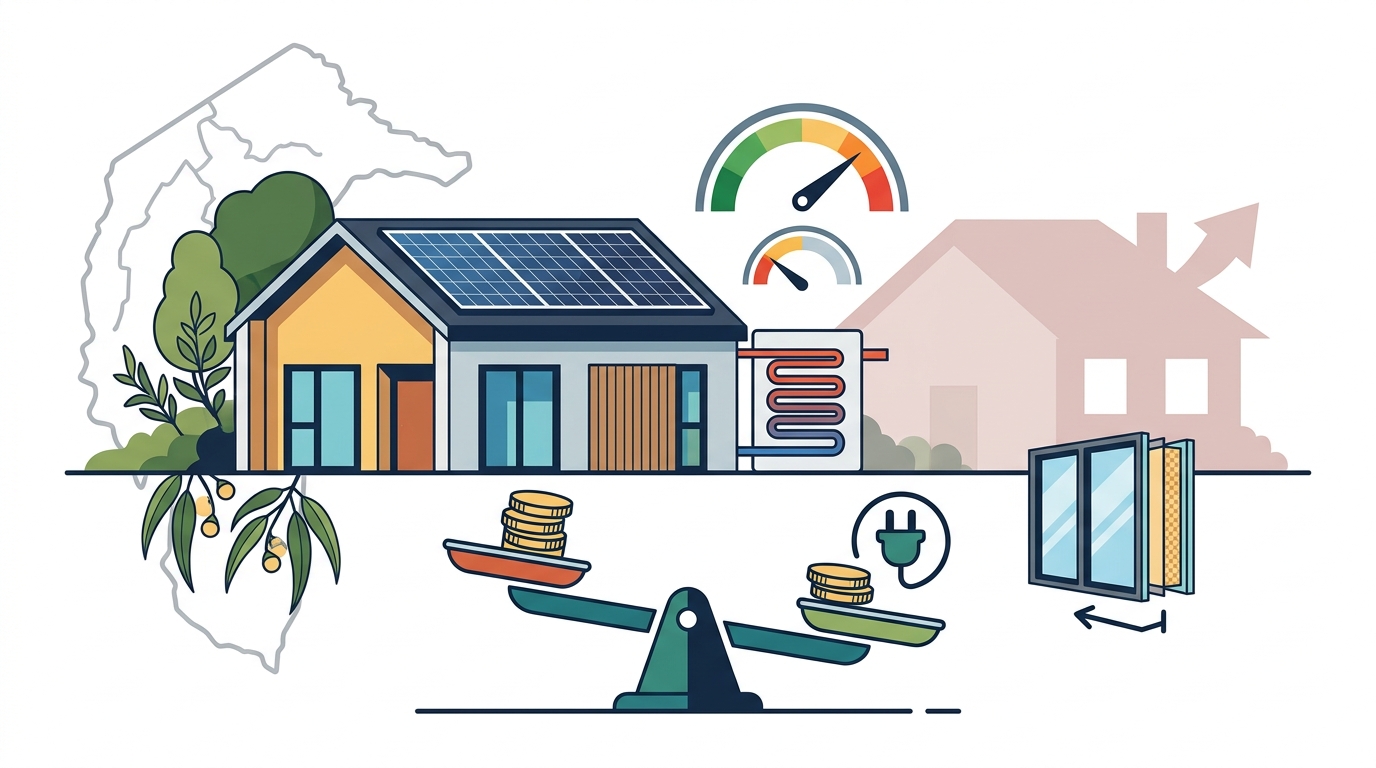
To understand the true cost-benefit ratio, it is helpful to compare a traditional home with a net-zero home over a 30-year period. The following table summarizes the key differences.
| Factor | Traditional Home | Net-Zero All-Electric Home |
|---|---|---|
| Upfront Construction Cost | Lower | 5-10% Higher |
| Annual Energy Bills | High (Gas + Electric) | Near Zero (Solar Offset) |
| Maintenance Costs | Higher (Gas Appliances) | Lower (All-Electric) |
| Comfort & Health | Variable | Consistent & High |
| Resale Value | Standard | Premium |
| Carbon Footprint | High | Net Zero |
While the traditional home may appear cheaper initially, the cumulative cost of energy and maintenance over 30 years often exceeds the upfront premium of a net-zero home. Additionally, the intangible benefits of comfort and health are invaluable.
Key Takeaways
- Passive House Standard: Passive House is a rigorous, scientifically verified standard for energy-efficient building that ensures comfort and health.
- Canberra Climate: Canberra's extreme temperatures make high-performance insulation and airtightness critical for energy efficiency.
- KETO Project Awards: The KETO Project won two 2026 True Zero Carbon Challenge awards, validating its design and performance.
- Cost Competitiveness: Prefabricated net-zero homes like the KETO Project start from $325,000 + GST, offering competitive pricing.
- Energy Independence: Net-zero homes generate their own power, eliminating reliance on volatile energy markets.
- Health Benefits: All-electric homes with HRV systems provide filtered fresh air and stable temperatures, improving indoor air quality.
- Long-Term Value: The combination of low running costs and high comfort levels increases the long-term resale value of the property.
Frequently Asked Questions
Is a net-zero home more expensive to build in Canberra?
While the upfront construction cost is typically 5-10% higher than a conventional home, the long-term operational savings and increased property value often offset this premium. Prefabricated options can further reduce this gap.
How does Passive House design help with Canberra's cold winters?
Passive House design uses superior insulation and airtightness to retain heat. Combined with passive solar gain through south-facing windows and efficient heat pumps, these homes remain warm and comfortable even in extreme cold.
What is the KETO Project?
The KETO Project is an award-winning, prefabricated net-zero home designed by reimagined habitat. It features 8+ NatHERS stars, net energy positive performance, and a starting price from $325,000 + GST.
Can I achieve net-zero with an all-electric home?
Yes. By combining high-performance building envelopes with efficient heat pumps and a sufficiently sized solar PV system, an all-electric home can easily achieve net-zero energy status.
What are the health benefits of a high-performance home?
High-performance homes offer stable temperatures, reduced drafts, and filtered fresh air via Heat Recovery Ventilation (HRV). This leads to improved indoor air quality and reduced risk of respiratory issues.
How long does it take to build a prefab net-zero home?
Prefabricated homes like the KETO Project can be built significantly faster than traditional homes. The off-site manufacturing process reduces weather delays and construction time, often allowing for quicker occupancy.
Are there government incentives for net-zero homes in Canberra?
Canberra and the ACT government offer various incentives for sustainable building, including rebates for solar PV systems and energy-efficient appliances. It is advisable to consult with a certified designer to maximize these benefits.
Start Your Net Zero Journey
Building a net-zero, all-electric home in Canberra is a strategic investment in your future. It offers financial security, environmental responsibility, and superior living comfort. reimagined habitat specializes in designing and delivering high-performance homes that meet these exact needs.
We offer a complete interior and building design service for home improvements and new construction. Our team of Certified Passive House Designers can guide you through the process, from initial concept to final handover. We also provide a free 30-minute design consultation to help you understand the potential of your site and the benefits of Passive House principles.
Register for a FREE 30-minute design consultation today. Limited availability is offered each month, so secure your slot now to begin transforming your vision into a healthy, energy-efficient reality.