
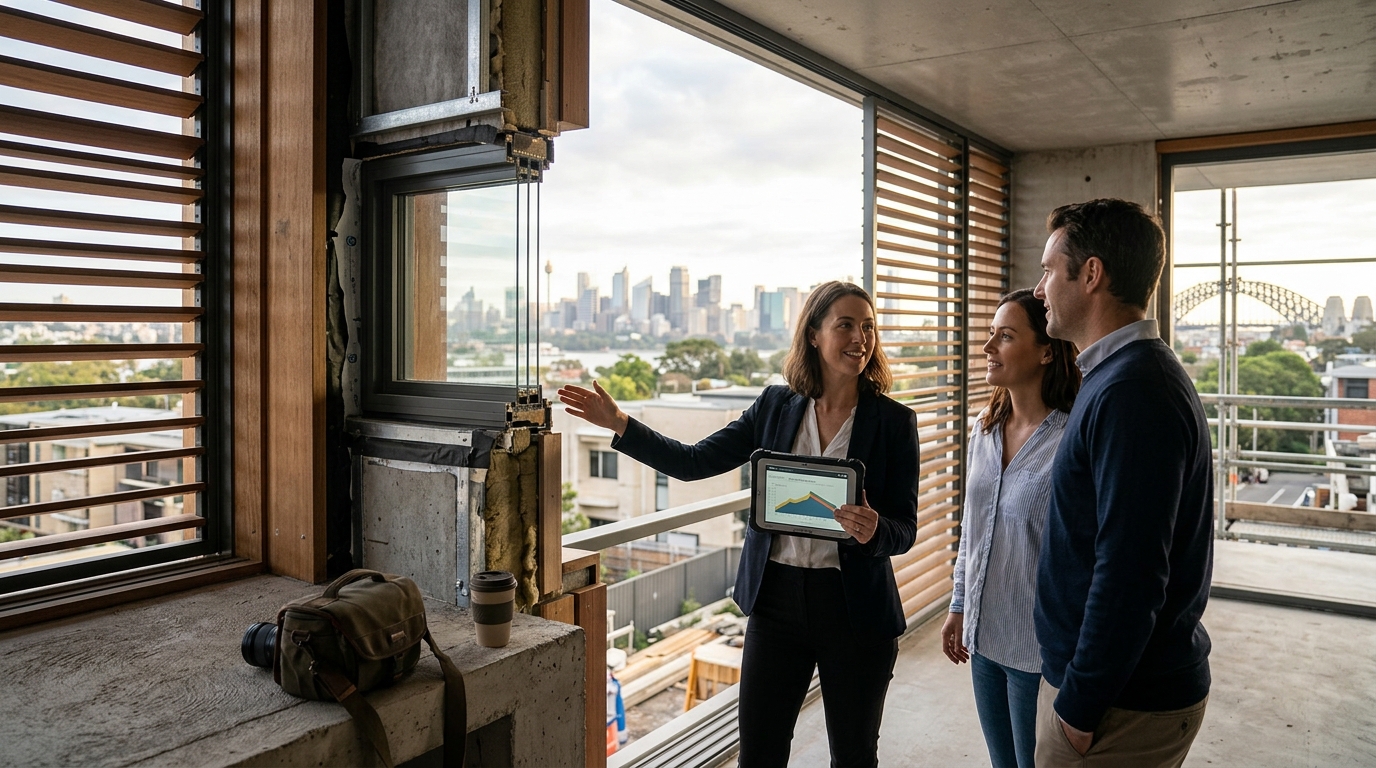
Building a home in Sydney involves navigating some of the highest construction costs in the world. However, the traditional model of construction is rapidly becoming financially obsolete. According to recent industry data, high-performance homes can reduce energy consumption by up to 90% compared to standard builds. This shift is not merely an environmental choice but a critical financial strategy for Sydney homeowners facing volatile utility rates and rising insurance premiums. The initial investment in superior insulation, airtightness, and thermal bridging elimination pays dividends through drastically reduced operational costs and increased property resilience.
Defining High-Performance Standards
To understand the cost-benefit analysis, we must first define what constitutes a high-performance home. In the context of Australian building science, this term refers to structures designed using rigorous energy efficiency principles. Passive House is a specific, scientifically verified building standard that focuses on thermal comfort, air quality, and energy conservation. Passive House is a rigorous international standard for energy-efficient building design.
Unlike standard Australian homes that rely heavily on mechanical heating and cooling to combat extreme temperatures, high-performance homes utilize a "fabric-first" approach. This means the building envelope itself does the heavy lifting. By eliminating thermal bridges and ensuring extreme airtightness, the home retains heat in winter and excludes it in summer. This reduces the load on HVAC systems to near zero. The result is a home that is comfortable year-round regardless of external weather conditions.
For Sydney homeowners, this is particularly relevant given the city's humid summers and chilly, damp winters. Standard construction often struggles with condensation and mold, leading to costly remediation. High-performance design prevents these issues at the source. The team at reimagined habitat specializes in this exact methodology, ensuring that every design decision contributes to long-term financial and physical health.
Upfront Cost Breakdown
The most common objection to high-performance building is the perceived premium cost. It is true that the initial outlay is higher than a standard volume build. However, the cost structure is different. You are paying for quality materials and precision engineering rather than cheap labor and inefficient systems.
Consider the KETO Project, an award-winning prefab home design. The KETO Project is a net-zero carbon prefab home that has won national awards for its material research. Starting from $325,000 plus GST, this price includes triple-glazed windows, wood-fiber insulation, and a fully insulated panel system. This is not a bare-bones shell; it is a complete, high-specification home ready for occupation.
When comparing this to a traditional site-built home in Sydney, the costs align differently. Traditional builds often have hidden costs in the form of ongoing upgrades. For example, a standard home might require a $15,000 air conditioning system to remain comfortable. A high-performance home might require only a small, efficient heat pump or even passive ventilation alone. The upfront cost of the high-performance envelope is an investment that removes future capital expenditure.
Furthermore, prefabricated construction methods, such as those used for the Banksia prefab home, reduce on-site labor time significantly. Less time on site means lower risk of weather delays and reduced labor costs. This efficiency is passed on to the client, narrowing the gap between the initial quote and the final price.
Operational Savings & ROI
The true financial benefit of high-performance homes emerges over time. Energy bills in Sydney have risen sharply in recent years. A standard 4-bedroom home in Sydney can easily cost $3,000 to $5,000 per year in heating and cooling. A Passive House or net-zero home can reduce this by 90% or more. This means annual savings of $2,700 to $4,500.
Over a 30-year mortgage, these savings total between $81,000 and $135,000. This is money that stays in your pocket rather than going to energy providers. Additionally, the reduced strain on the electrical grid can lead to lower insurance premiums in some regions, as the home is less prone to fire and storm damage due to its robust construction.
The KETO Project achieves net energy positive status. Net energy positive means the home generates more energy than it consumes over the course of a year. This is achieved through high-efficiency panels and minimal energy demand. For a Sydney homeowner, this translates to a potential income stream from selling excess power back to the grid, depending on local feed-in tariff rates.
Moreover, the durability of high-performance materials is superior. Wood-fiber insulation and triple-glazed windows last longer than standard alternatives. This reduces the frequency of replacements and maintenance costs. The total cost of ownership is significantly lower, even if the purchase price is higher.
Health, Productivity & Comfort
Financial metrics do not tell the whole story. The health benefits of high-performance homes are substantial and increasingly valued by buyers. Indoor air quality in standard homes is often poor due to off-gassing from cheap materials and lack of ventilation. High-performance homes use filtered fresh air systems to ensure constant air exchange. This removes pollutants, allergens, and excess humidity.
Studies show that improved indoor air quality can increase cognitive function by up to 61%. For families working from home, this is a critical factor. The stable thermal comfort also reduces stress and improves sleep quality. These are intangible benefits that contribute to overall well-being and quality of life.
The Correa prefab home design emphasizes healthy living through its material palette. Low-VOC interiors and natural finishes create a non-toxic environment. This is particularly important for families with children or elderly members who are more sensitive to air quality issues.
Comfort is also a financial asset. Homes that are comfortable year-round command higher resale values. Buyers are increasingly aware of energy efficiency and are willing to pay a premium for homes that offer lower running costs and better health outcomes. This future-proofs your investment against changing market preferences and regulatory requirements.
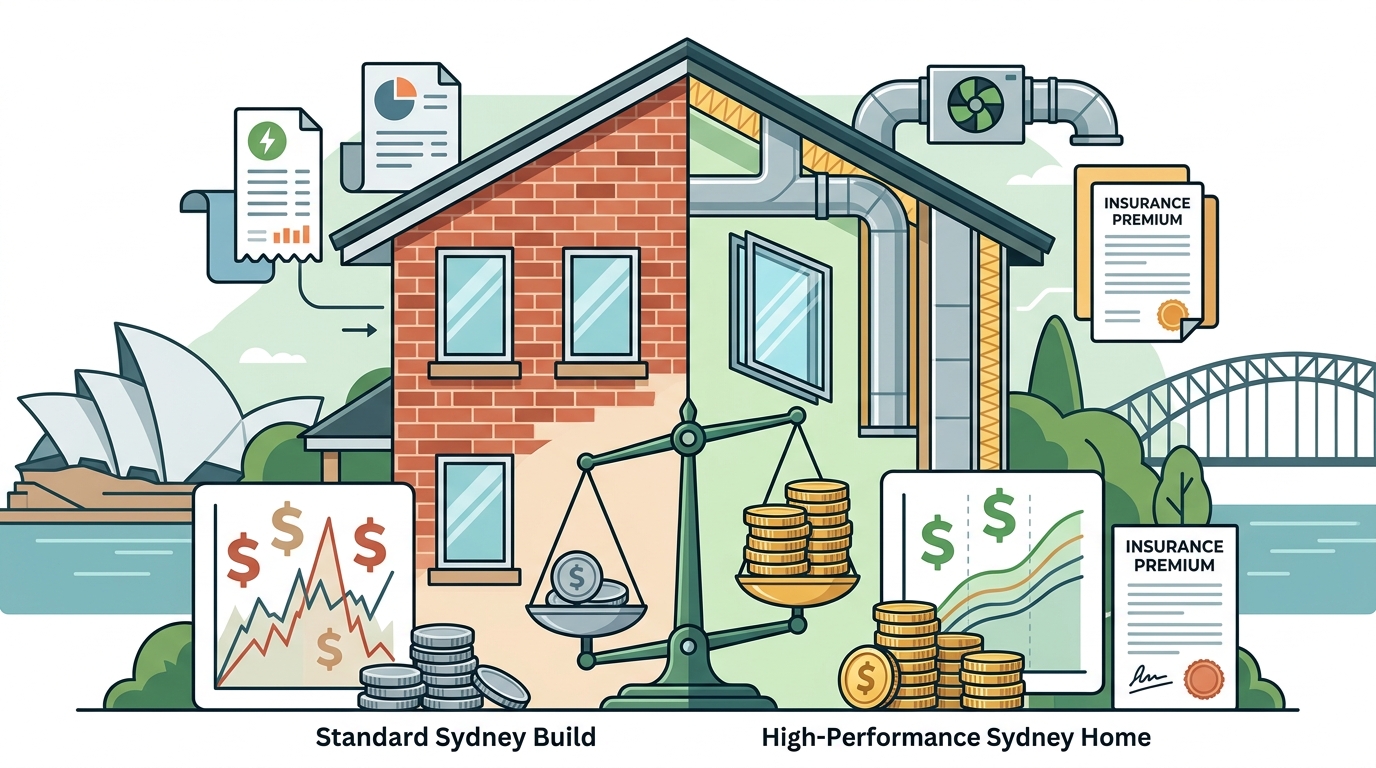
Comparing KETO vs Standard Builds
To illustrate the cost-benefit analysis, let us compare the KETO Project to a typical Sydney site-built home. The KETO Project is a 190-square-meter double-storey home. It includes three bedrooms, two bathrooms, and a single garage. The design is optimized for passive solar gain, with living spaces facing north.
| Feature | KETO Project (High-Performance) | Standard Sydney Build |
|---|---|---|
| Initial Cost | From $325,000 + GST | $450,000 - $600,000+ |
| Energy Consumption | Net Zero / Positive | High (Standard HVAC) |
| Airtightness | ≤0.6 ACH50 | ~5-10 ACH50 |
| Indoor Air Quality | Filtered Fresh Air | Dependent on Windows |
| Construction Time | Faster (Prefab) | Slower (Site-built) |
| Resale Value | Premium (Future-Proof) | Standard Market Rate |
The table above highlights the stark differences. While the KETO Project has a lower initial cost, its performance metrics are vastly superior. The standard build may seem cheaper initially, but the ongoing costs and lower comfort levels make it a less attractive option in the long run.
The KETO Project also offers design flexibility. It can be adapted for granny flats, secondary dwellings, or family homes. This versatility adds to its value proposition. You are not just buying a house; you are buying a adaptable, high-performance asset.
Key Takeaways
- Energy Savings: High-performance homes can reduce energy bills by up to 90%, saving tens of thousands over a home's lifetime.
- Health Benefits: Filtered fresh air and low-VOC materials significantly improve indoor air quality and respiratory health.
- KETO Project Specs: The KETO Project starts from $325,000 + GST and achieves net-zero carbon by 2048.
- Construction Speed: Prefab methods reduce on-site time, minimizing weather delays and labor costs.
- Resale Value: Energy-efficient homes command higher prices in the Sydney property market.
- Comfort: Stable temperatures and airtightness eliminate drafts and cold spots year-round.
- Future-Proofing: These homes meet and exceed future building codes, protecting your investment.
Frequently Asked Questions
Is a high-performance home more expensive to build in Sydney?
While the initial cost can be higher than a basic build, the total cost of ownership is lower due to energy savings and durability. Prefab options like the KETO Project offer competitive pricing starting from $325,000.
What is the Passive House standard?
Passive House is a rigorous international standard for energy-efficient building that focuses on thermal comfort, air quality, and energy conservation through superior insulation and airtightness.
How much energy can I save with a net-zero home?
Net-zero homes generate as much energy as they consume. This can lead to near-zero energy bills and potential income from selling excess power back to the grid.
Are prefab homes as durable as site-built homes?
Yes, prefab homes are often more durable due to controlled factory construction. The KETO Project uses high-quality materials like wood-fiber insulation and triple-glazed windows.
Can I customize a high-performance home design?
Absolutely. Designs like the Net Zero Habitat range offer flexibility for granny flats, secondary dwellings, and family homes, tailored to your site and budget.
What is embodied carbon?
Embodied carbon is the total greenhouse gas emissions generated during the manufacturing, transport, and installation of building materials. High-performance homes minimize this through material selection.
How does airtightness improve comfort?
Airtightness prevents drafts and uncontrolled air leakage, ensuring that heated or cooled air stays inside. This creates a consistent and comfortable indoor environment.
Start Your High-Performance Journey
Building a high-performance home is a decision that impacts your finances, health, and the environment. The cost-benefit analysis clearly favors investing in superior design and construction. Whether you are interested in the award-winning KETO Project or a custom design, the team at reimagined habitat is ready to help.
Register for a free 30-minute design consultation to discuss your goals and explore the possibilities for your future home. Take the first step toward a healthier, more efficient lifestyle.