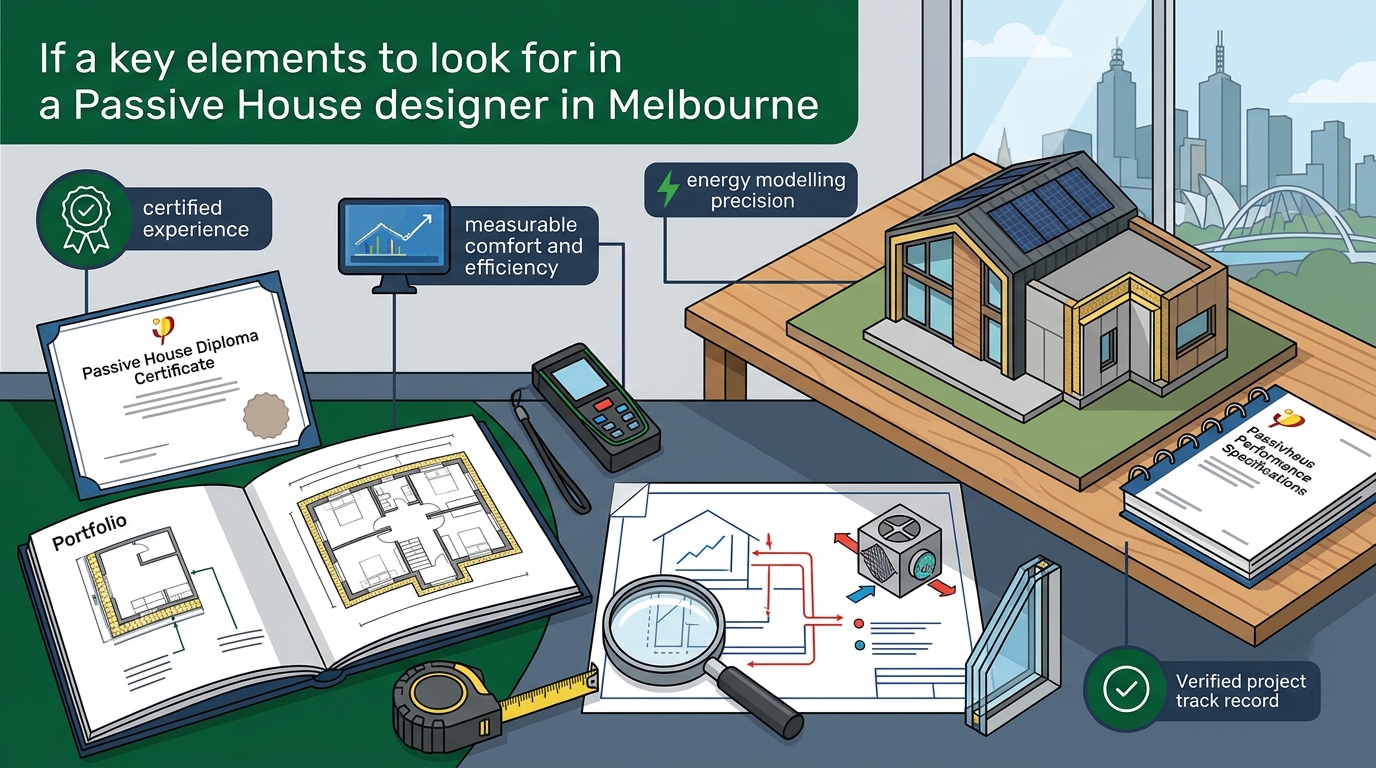
When choosing a passive house designer in Melbourne, you should look for a professional with certified Passive House experience, a strong track record of completed projects, and a commitment to rigorous energy modelling. The right designer will integrate performance criteria early in the process, ensuring your home is not just built to principles but verified for measurable comfort and efficiency.
The Importance of Certified Expertise
Passive House is a globally recognised performance standard focused on comfort, health, and energy efficiency. It is not merely a style or a set of aesthetic choices. It is a rigorous methodology that requires specific technical knowledge to implement correctly. In Melbourne, the climate presents unique challenges, including high humidity and significant temperature swings. A designer who understands these local conditions is essential for a successful outcome.
While many professionals claim to build to Passive House principles, certification is a key differentiator. A certified Passive House designer has undergone specific training and assessment. This ensures they understand the intricate detailing and construction processes required to meet the standard. At reimagined habitat, our team includes certified designers who specialise in creating healthy, high-performance homes that respond to the local climate.
Experience is just as important as certification. A designer should have a portfolio of completed projects that demonstrate their ability to deliver on their promises. Look for evidence of real-world performance, such as energy consumption data or post-occupancy evaluations. This proves that the design works in practice, not just on paper.
Energy Modelling and the PHPP Process
Energy modelling is the backbone of any Passive House project. It is the process of using software to simulate how a building will perform before it is built. The Passive House Planning Package (PHPP) is the standard tool used for this purpose. It allows designers to test different components and scenarios to predict overall building performance.
Many projects fail because they skip this step or treat it as an afterthought. A competent designer will use PHPP early in the design phase. This allows them to identify potential issues, such as thermal bridges or airtightness gaps, before they become costly problems. It also provides a clear baseline for the expected energy performance of the home.
At reimagined habitat, we believe that good intentions do not equal predictable results. Building physics needs to be measured, not assumed. By running calculations early, we can ensure that the design meets the required performance targets. This approach saves time and money by preventing costly changes during construction.
Collaboration with Builders and Specialists
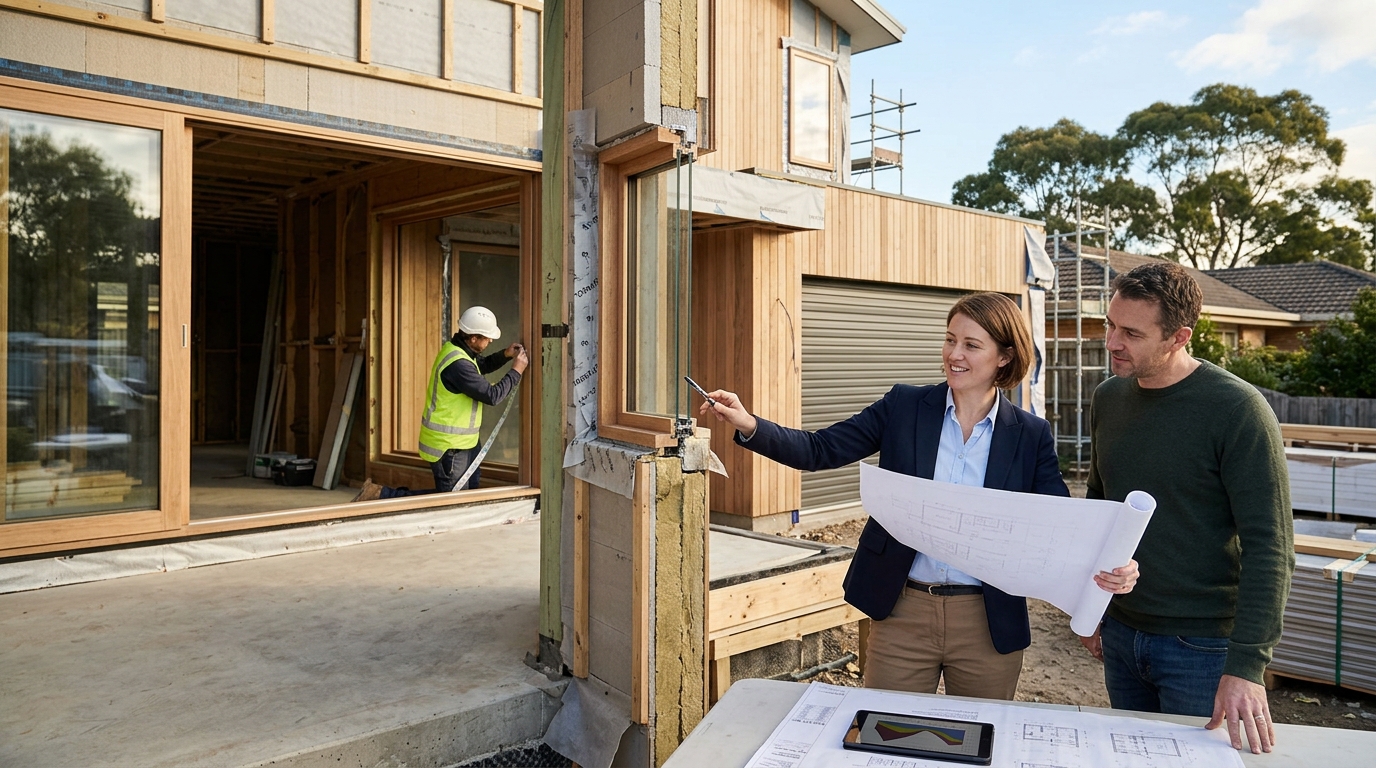
A Passive House is a system, not a collection of parts. It requires a high level of coordination between the designer, builder, and other specialists. A good designer will work closely with your builder from the concept stage. This early collaboration helps to identify construction feasibility, costs, and procurement options.
In Melbourne, the supply chain for high-performance components can be complex. A designer who has a trusted network of builders and tradespeople can navigate these challenges more effectively. They can advise on the best materials and construction techniques to achieve the desired performance. This reduces the risk of miscommunication and ensures that the final build matches the design intent.
Look for a designer who is proactive in assembling a diverse and experienced team. This includes structural engineers, building surveyors, and quantity surveyors. By bringing these specialists into the process early, you can resolve potential issues before they impact the project timeline or budget.
Understanding the Cost and Value Proposition
One of the most common questions is whether a Passive House is worth the extra cost. In Australia, the premium for a certified Passive House is usually in the range of 5 to 15 percent more than a comparable standard home. However, this premium can be significantly lower if the principles are integrated from the very first design decisions.
The value of a Passive House extends beyond energy bills. It includes improved indoor air quality, better thermal comfort, and reduced noise levels. These factors contribute to a higher quality of life and can increase the resale value of the property. A good designer will help you understand the long-term benefits and how they align with your personal goals.
At reimagined habitat, we provide clear and honest advice on the costs and benefits of Passive House design. We help you make informed decisions that fit your budget and lifestyle. Our goal is to create homes that are not only efficient but also comfortable and healthy for the people living in them.
Key Takeaways
- Look for a designer with certified Passive House experience and a strong portfolio of completed projects.
- Ensure the designer uses rigorous energy modelling with PHPP to verify performance early in the process.
- Choose a designer who collaborates closely with builders and specialists to ensure construction feasibility.
- Understand the cost premium, which is typically 5 to 15 percent, and how it can be minimized through early integration.
- Verify that the designer understands Melbourne's specific climate challenges, including humidity and temperature swings.
- Ask for evidence of real-world performance, such as energy data or post-occupancy evaluations.
Frequently Asked Questions
What is the difference between Passive Solar and Passive House?
Passive Solar design uses the sun's energy for heating and cooling but relies heavily on the skill of the builder. Passive House is a rigorous standard that includes energy modelling, airtightness, and high-performance components to guarantee specific performance outcomes.
How much does a Passive House cost in Melbourne?
The premium for a certified Passive House is typically 5 to 15 percent more than a standard home. This cost can be lower if the principles are integrated from the start of the design process.
Do I need a certified designer for a Passive House?
While not legally required, a certified designer is highly recommended. Certification ensures they have the specific training and knowledge to implement the standard correctly and achieve the desired performance.
Can I renovate an existing home to Passive House standard?
Yes, it is possible to renovate an existing home to Passive House standard. The best candidates are homes where the external cladding can be easily removed, such as weatherboard homes, allowing for the installation of insulation and airtightness layers.
What is the role of PHPP in Passive House design?
PHPP is the standard software used for energy modelling in Passive House projects. It allows designers to simulate and verify the building's performance before construction, ensuring that the design meets the required criteria.
Next Steps
Choosing the right Passive House designer is a critical decision that will impact the comfort, health, and efficiency of your home for decades. By looking for certified expertise, rigorous energy modelling, and strong collaboration, you can ensure that your project delivers on the promises of the Passive House standard. If you are ready to start your journey, to discuss your project and explore how we can help you create a high-performance home in Melbourne.