
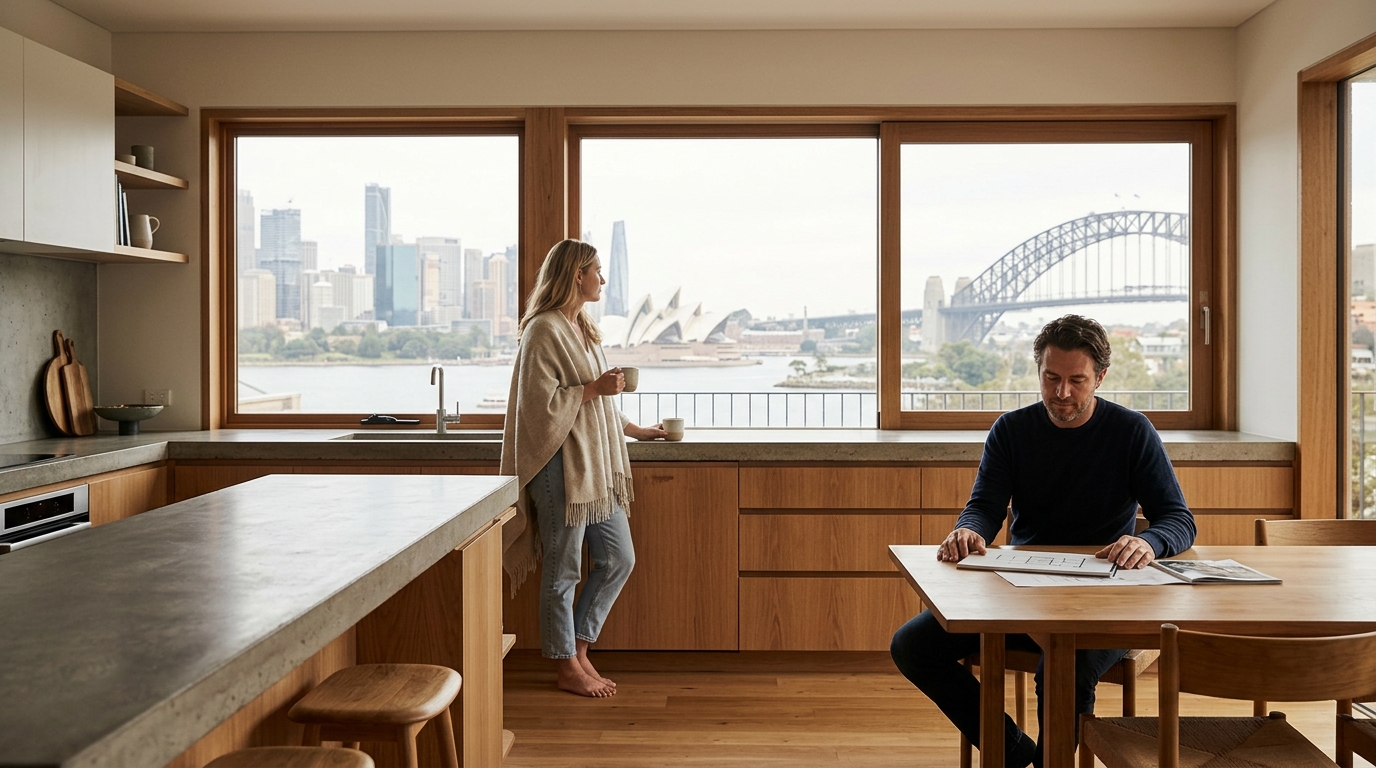
Building a home in Sydney involves navigating some of the highest construction costs in the world, yet the long-term value of high-performance design is becoming impossible to ignore. According to recent industry data, energy-efficient homes in Australia are increasingly demonstrating a rapid return on investment through reduced utility bills and increased property resilience. This guide breaks down the financial realities of implementing Passive House principles in the Sydney market, moving beyond initial premiums to reveal the true lifetime value of a healthy, high-performance habitat.
What Is Passive House Design?
Passive House is a rigorous, voluntary energy efficiency standard for buildings that drastically reduces their ecological footprint. Passive House is a building science methodology that prioritizes extreme airtightness, superior insulation, and heat recovery ventilation to minimize energy demand. Unlike conventional Australian homes that rely heavily on mechanical heating and cooling to combat Sydney's humid summers and cool winters, Passive House homes maintain stable, comfortable temperatures year-round with minimal energy input.
This standard is not just a marketing term; it is a scientifically verified performance metric. The principles were developed in Germany over 30 years ago and have since been adapted for diverse climates, including the specific challenges of the Australian continent. For Sydney homeowners, this means designing out the need for constant air conditioning, which is typically the largest driver of electricity costs in the region.
At reimagined habitat, we specialize in translating these global standards into local reality. Our team of Certified Passive House Designers understands the nuances of Sydney's microclimates, from the coastal humidity of the Northern Beaches to the inland heat of the Hills District. We ensure that every design not only meets the strict Passive House criteria but also aligns with local planning regulations and aesthetic preferences.
Sydney Construction Cost Realities
Understanding the baseline cost of building in Sydney is crucial for any accurate cost-benefit analysis. Construction prices in Sydney have risen significantly in recent years, driven by labor shortages, material inflation, and complex site conditions. Average construction costs for a standard quality new home in Sydney currently range between $3,500 and $4,500 per square meter.
However, these figures often exclude essential services, landscaping, and design fees. When you factor in the full turnkey cost, the financial picture becomes clearer. Traditional building methods often lead to "performance gaps," where the built home does not perform as efficiently as the design documents suggest. This gap results in higher-than-expected energy bills for the homeowner, a hidden cost that accumulates over the life of the building.
High-performance design eliminates this uncertainty. By using prefabricated components and precise engineering, we can lock in costs earlier in the process. This approach reduces the risk of budget overruns, which are common in traditional custom builds. For more details on our design process, visit our About Us page to see how our team blends experience with innovative thinking.
The Upfront Premium Explained
The most common question we receive is about the initial cost difference. It is true that achieving Passive House certification requires specific materials and construction techniques that carry a premium. However, the gap has narrowed significantly as supply chains for high-performance materials have matured in Australia.
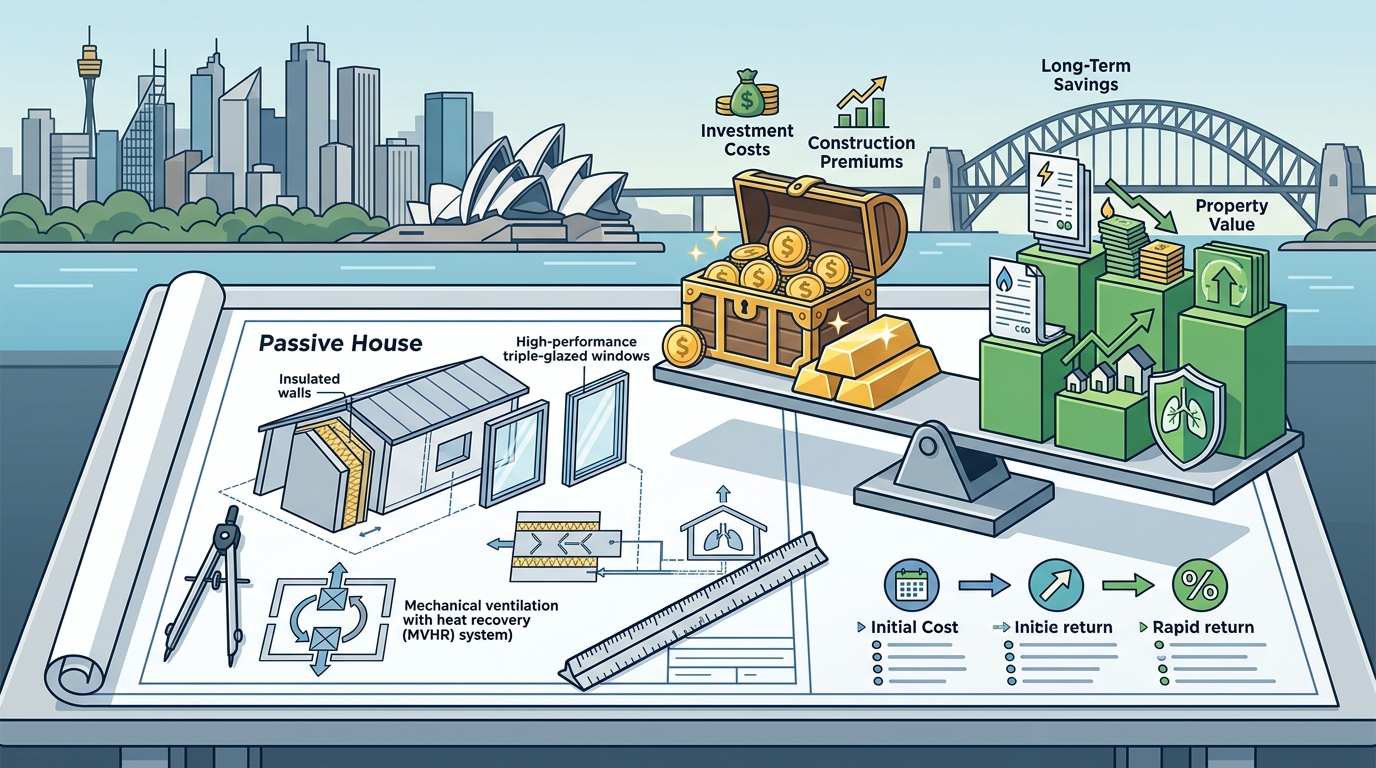
Typically, the upfront cost premium for a Passive House design ranges from 5% to 10% above a standard building contract. This premium covers:
- Airtightness Membranes: Specialized tapes and membranes that seal every joint and penetration.
- High-Performance Windows: Triple-glazed windows with insulated frames, such as the uPVC options we use.
- Thermal Bridge-Free Detailing: Careful engineering to prevent heat loss at structural junctions.
- Heat Recovery Ventilation (HRV): A mechanical system that provides fresh, filtered air while retaining up to 90% of the heat from exhaust air.
While these costs may seem high initially, they are investments in durability and efficiency. Our approach focuses on optimizing these elements to ensure you are not paying for unnecessary over-engineering, but rather for precise, effective performance.
Operational Savings and ROI
The true value of Passive House design is revealed in the operational savings. In Sydney, where electricity prices are among the highest in the country, reducing energy consumption is a direct financial benefit. A standard Sydney home might spend $2,500 to $4,000 annually on heating and cooling. A Passive House home typically reduces this by 75% to 90%.
This means annual savings of $1,800 to $3,500 per year. Over a 30-year mortgage period, these savings can total over $100,000, effectively paying for the upfront premium multiple times over. Furthermore, as energy prices continue to rise, the value of this protection increases. Data shows that energy-efficient homes are increasingly resilient to energy price volatility, providing homeowners with predictable living costs.
Additionally, the integration of solar PV systems is more effective in Passive House homes. Because the energy demand is so low, a smaller, less expensive solar system can cover 100% of the home's electricity needs. This leads to a faster payback period for the solar investment and a higher likelihood of achieving net-zero energy status.
Health, Comfort, and Property Value
Beyond financial metrics, Passive House design offers profound benefits for health and comfort. Sydney's housing stock often suffers from poor indoor air quality, mold growth, and temperature fluctuations. Passive House homes eliminate these issues through continuous fresh air filtration and stable thermal conditions.
Indoor Air Quality is a critical component of Passive House design, ensuring that homes remain healthy and free from pollutants. The heat recovery ventilation system filters out pollen, dust, and pollution, which is particularly beneficial for residents with allergies or respiratory conditions. This creates a sanctuary of clean air, even during Sydney's bushfire smoke events or high-pollen seasons.
Property value is also impacted. As sustainability becomes a key driver for homebuyers, high-performance homes are commanding premium prices. Green building certifications are increasingly recognized by valuers and buyers as indicators of quality and future-proofing. Homes that are certified Passive House or achieve high NatHERS ratings are often sold faster and at higher prices due to their lower running costs and superior comfort.
Comparing Design Options: KETO vs. Net Zero Habitat
At reimagined habitat, we offer distinct pathways to high-performance living. Our KETO Project and our Net Zero Habitat range cater to different needs and budgets. The KETO Project is an award-winning prefab home that has won national awards for its carbon-positive design. It is designed to reach net zero carbon by 2048, beating the national target by two years.
In contrast, the Net Zero Habitat range offers flexible, pre-designed options for granny flats, secondary dwellings, or family homes. These designs are ideal for those seeking a quicker, more cost-effective entry into high-performance living. Both options utilize our core expertise in Passive House principles to ensure maximum efficiency.
| Feature | KETO Project | Net Zero Habitat Range |
|---|---|---|
| Design Type | Customizable Prefab | Pre-designed Flexible Modules |
| Carbon Target | Net Zero Carbon by 2048 | High Energy Efficiency (8+ Stars) |
| Awards | 2026 True Zero Carbon Challenge Winner | Designed for 10-star rating potential |
| Best For | Primary Family Homes | Granny Flats, Secondary Dwellings |
| Starting Price | From $325,000 + GST | Varies by configuration |
Key Takeaways
- Cost Efficiency: Passive House design reduces heating and cooling costs by up to 90%, offering significant long-term savings in Sydney.
- Upfront Investment: The initial premium is typically 5-10%, which is offset by operational savings within 7-10 years.
- Health Benefits: Continuous fresh air filtration improves indoor air quality, reducing allergens and pollutants.
- Property Value: High-performance homes are increasingly valued by buyers and valuers for their durability and low running costs.
- Energy Independence: Lower energy demand makes it easier and cheaper to achieve net-zero energy with solar power.
- Comfort: Stable temperatures and airtight construction eliminate drafts and cold spots, enhancing daily comfort.
- Expertise: Working with Certified Passive House Designers ensures the design is optimized for Sydney's specific climate.
Frequently Asked Questions
Is Passive House design suitable for Sydney's climate?
Yes, Passive House principles are highly effective in Sydney. The design focuses on keeping heat out during summer and retaining it during winter, which aligns perfectly with Sydney's temperate climate. Our team adapts the standard to local conditions, ensuring optimal performance year-round.
How much does it cost to build a Passive House in Sydney?
While costs vary based on site and design, the upfront premium is typically 5-10% over a standard build. However, the long-term savings on energy bills and increased property value often result in a net positive financial outcome over the life of the home.
What is the difference between Passive House and Net Zero Energy?
Passive House is a standard for extreme energy efficiency, focusing on reducing demand first. Net Zero Energy means the home produces as much energy as it consumes. A Passive House home is the ideal foundation for achieving Net Zero Energy because its low demand makes solar generation more feasible and cost-effective.
Can I achieve Passive House standards with a prefab home?
Absolutely. Prefabrication often enhances the quality of Passive House construction by allowing for precise manufacturing of airtight components in a controlled factory environment. Our KETO Project and Net Zero Habitat range are examples of this.
How does Passive House improve indoor air quality?
Passive House homes use a heat recovery ventilation system that continuously filters fresh air from outside while expelling stale air. This system removes pollutants, pollen, and moisture, ensuring a constant supply of clean, healthy air without opening windows.
Are there government incentives for Passive House in NSW?
While specific incentives change, there are often rebates for solar PV systems and battery storage in NSW. Additionally, high energy efficiency can lead to lower council rates and faster development approval times in some local government areas due to reduced environmental impact.
What is the KETO Project?
The KETO Project is an award-winning, carbon-positive prefab home design by reimagined habitat. It is designed to reach net zero carbon by 2048 and has won national awards for its innovative materials research and energy performance.
Start Your Design Journey
Understanding the cost-benefit analysis is just the first step. The real value comes from implementing a design that works for your specific site and lifestyle. We offer a free 30-minute design consultation to help you explore the possibilities for your future home. During this session, we will discuss your goals, identify potential risks, and outline a clear path forward. Contact us today to schedule your consultation and discover how Passive House design can transform your living experience in Sydney.