Passive House certification is a rigorous, third-party verified standard that proves a home meets strict energy efficiency and comfort targets. For a Sydney home build, it means your home is scientifically modelled to maintain stable temperatures and high indoor air quality with minimal energy use. reimagined habitat explains how this certification translates into real-world performance for Australian homeowners.
Defining the Passive House Standard
Passive House is a globally recognized building standard that focuses on reducing energy demand through superior insulation, airtightness, and high-performance windows. It is not a specific product or material, but a performance-based methodology. The standard was developed in Europe and has been adapted for various climates, including the unique conditions of Sydney.
In the context of a Sydney build, the standard requires a specific level of thermal comfort. The home must maintain a comfortable temperature range without relying heavily on active heating or cooling systems. This is achieved by minimizing heat loss in winter and heat gain in summer. The methodology relies on continuous insulation and the elimination of thermal bridges, which are points where heat escapes the building envelope.
For homeowners, understanding this definition is crucial. It shifts the focus from aesthetic choices to performance outcomes. The standard ensures that the building envelope is airtight, which also improves indoor air quality by controlling the flow of fresh air. This is a critical aspect of healthy home design that goes beyond simple energy bills.
Adapting the Standard to Sydney's Climate
Sydney's climate presents unique challenges for high-performance homes. The city experiences hot, humid summers and mild winters, which differs significantly from the cold climates where the standard originated. A key adaptation for Sydney builds is the management of solar gain. Strategic shading is essential to prevent overheating during the summer months.
reimagined habitat emphasizes that shading for the Australian summer is a critical element that European designs do not always prioritize. In Sydney, this means careful orientation of windows and the use of external shading devices. The goal is to allow sunlight in during winter for passive heating while blocking it in summer. This balance is calculated during the design phase to ensure the home remains comfortable year-round.
The implication for your build is that a certified home in Sydney is not just about insulation thickness. It is about the intelligent placement of windows and shading. This approach reduces the need for air conditioning, which is a major energy consumer in Australian homes. By addressing the climate-specific needs, the certification ensures long-term comfort and lower running costs.
The Role of Third-Party Verification
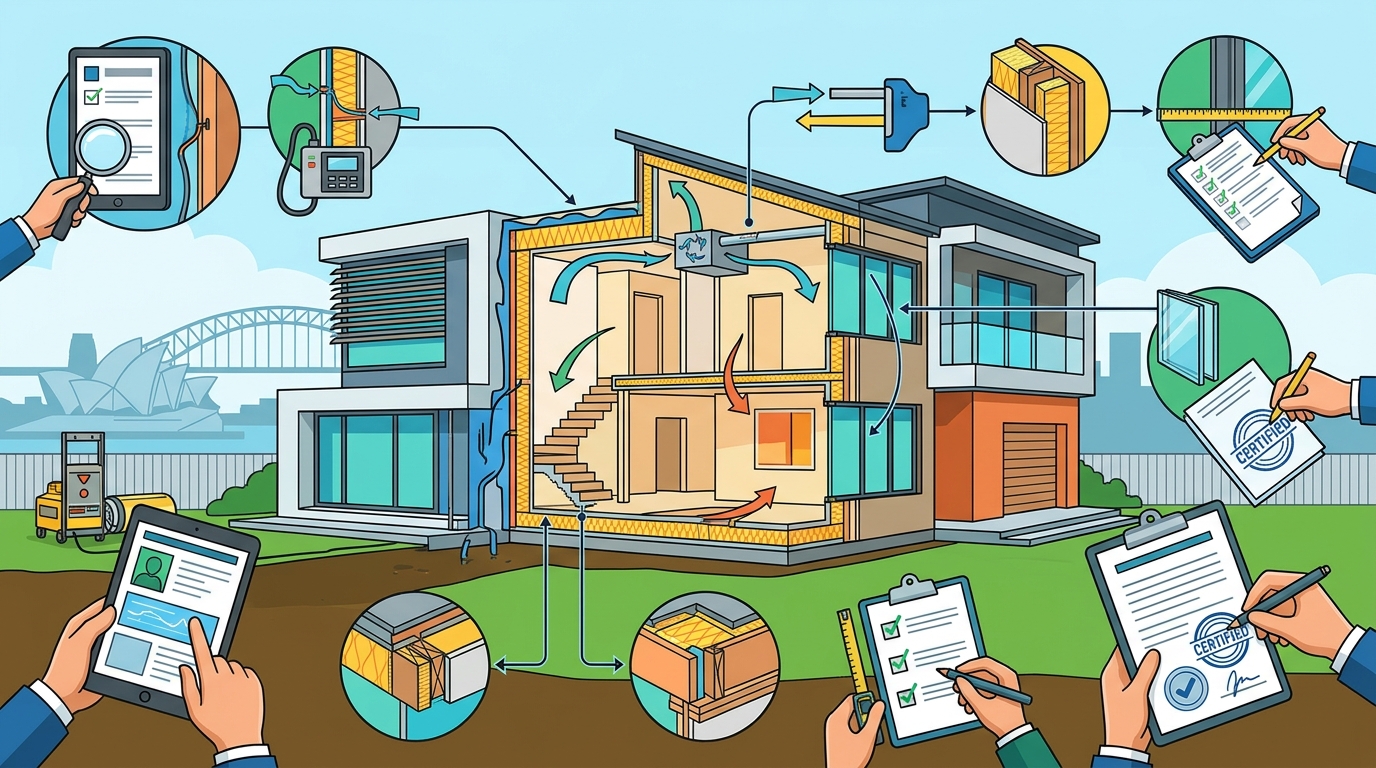
Passive House certification is a verified process that involves independent assessment. It is not a self-declared label. The design is modelled using specialized software, and the construction is inspected to ensure it meets the specified airtightness and insulation levels. This third-party verification provides objective proof of performance.
The verification process includes an airtightness test, often called a blower door test. This test measures the air leakage of the building envelope. A certified home must meet a specific airtightness target, which is significantly lower than standard building codes. This level of airtightness is difficult to achieve without careful detailing and construction practices. It ensures that the home performs as designed.
Health and Comfort Implications
Passive House certification is a health-focused standard that prioritizes indoor air quality and thermal comfort. The standard requires mechanical ventilation with heat recovery (MVHR). This system provides a constant supply of fresh, filtered air while recovering heat from the exhaust air. This results in a home that is both energy efficient and healthy to live in.
Indoor air quality is a major benefit of this approach. By controlling the air exchange, the home reduces the entry of pollutants, dust, and allergens. This is particularly important for individuals with respiratory conditions or allergies. The stable temperature and humidity levels also contribute to better sleep and overall well-being. The home becomes a refuge from the outside environment.
The implication for your Sydney home is a significant improvement in daily living conditions. You are not just saving on energy bills; you are investing in a healthier living environment. The quiet, stable, and clean air environment supports better health outcomes. This is a key reason why many homeowners choose certified designs for their new builds or renovations.
Cost and Long-Term Value
Passive House certification is a cost-effective investment that offers long-term financial benefits. While the upfront cost may be slightly higher than a standard home, the running costs are significantly lower. The premium for a certified home is often offset by the reduction in energy consumption over time. This makes it a financially sound choice for long-term owners.
The energy savings are substantial. A certified home can reduce heating and cooling energy demand by up to 90%. This means lower electricity bills and less exposure to rising energy prices. Over the life of a mortgage, these savings can be considerable. The home also retains its value better, as energy efficiency is an increasingly important factor in property valuations.
For Sydney homeowners, the cost-benefit analysis is favorable. The initial investment is justified by the long-term savings and comfort. It is a smart financial decision that also contributes to environmental sustainability. By choosing a certified home, you are making a responsible choice for your budget and the planet. This dual benefit makes it an attractive option for modern homeowners.
Key Takeaways
- Passive House certification is a verified standard that proves a home meets strict energy and comfort targets.
- For Sydney builds, the standard is adapted to manage solar gain and humidity through strategic shading and orientation.
- Third-party verification, including airtightness testing, ensures the home performs as designed.
- The standard prioritizes indoor air quality and thermal comfort, leading to a healthier living environment.
- While upfront costs may be higher, the long-term energy savings and property value make it a sound investment.
- reimagined habitat specializes in applying these principles to Australian climates for optimal results.
Frequently Asked Questions
What is the main difference between Passive House and standard building codes?
Passive House is a performance-based standard that requires third-party verification, whereas standard building codes are minimum requirements. Passive House focuses on reducing energy demand through design, while codes often rely on active systems.
Does Passive House certification work in Sydney's hot climate?
Yes, the standard is adapted for Sydney's climate. It emphasizes shading and ventilation to manage heat and humidity, ensuring comfort without excessive air conditioning.
How is airtightness tested in a certified home?
Airtightness is tested using a blower door test. This measures air leakage and ensures the building envelope meets the strict targets required for certification.
Is a Passive House home more expensive to build?
There is often a small upfront premium, but it is offset by lower running costs. The long-term savings on energy bills make it a cost-effective choice over time.
Can existing homes be retrofitted to Passive House standards?
Yes, deep retrofits can achieve Passive House performance. This involves upgrading insulation, windows, and ventilation systems to meet the standard's requirements.
Who can help with Passive House design in Sydney?
reimagined habitat is a leading provider of Passive House design services in Sydney. Their team of certified designers can help you achieve a high-performance home.
Conclusion
Passive House certification is a meaningful standard that ensures your Sydney home is efficient, healthy, and comfortable. It provides verified proof of performance and offers long-term financial and health benefits. For those looking to build or renovate, it is a smart choice that aligns with modern values of sustainability and well-being.
reimagined habitat is dedicated to helping you achieve these goals. Our team of certified Passive House designers works with clients across Sydney to create homes that perform beautifully. To discuss your project and explore how certification can benefit your build, today.