
Comparing Sustainable Design Specialists for Your Canberra Home Renovation
Canberra’s unique high-altitude climate demands a rigorous approach to home renovation, where thermal comfort and energy efficiency are not just luxuries but necessities. Research indicates that homes in the Australian Capital Territory face some of the most extreme temperature fluctuations in the nation, making the choice of design specialist critical for long-term livability. When selecting a partner for a sustainable renovation, you are not merely hiring an architect; you are investing in a scientific framework that dictates your home’s performance for decades. (Passive House Designer Australia)
Understanding Canberra’s Climate Challenges
Canberra is often described as having a continental climate, characterized by hot, dry summers and cold, crisp winters. This duality creates a significant burden on heating and cooling systems in traditional homes. The average annual temperature range can swing dramatically, requiring a building envelope that is exceptionally robust against heat loss in winter and heat gain in summer.
Standard building codes, while improving, often lag behind the performance requirements needed for true comfort in this specific geographic zone. According to Bureau of Meteorology data, Canberra experiences some of the coldest winter nights in southeastern Australia. This reality means that a sustainable design specialist must prioritize thermal bridging elimination and airtightness far more than their counterparts in milder climates like Brisbane or Perth.
When evaluating specialists, ask how they account for these specific microclimates. Do they use dynamic energy modeling software, or do they rely on static assumptions? The difference between a good renovation and a great one lies in the precision of these early-stage calculations.
Passive House vs. Standard Sustainable Design
The term "sustainable design" is broad and often used loosely in the marketing materials of various architectural firms. To make an informed comparison, you must distinguish between general green building practices and the rigorous Passive House standard. Passive House is not a style of architecture; it is a performance-based certification system that ensures buildings use up to 90% less energy for heating and cooling.
Passive House is a rigorous international building standard focused on ultra-low energy consumption through superior insulation, airtightness, and heat recovery ventilation. In contrast, standard sustainable design might focus on solar panel installation or water harvesting without addressing the fundamental envelope performance.
For a Canberra home, the Passive House approach offers a distinct advantage. By creating a "thermal blanket" around the home, you reduce the load on mechanical systems. This is particularly relevant given the Passive House Institute Australia guidelines, which emphasize that local climate adaptation is crucial for certification success. Specialists who are certified Passive House designers bring a level of technical expertise that generalists often lack.
Key Evaluation Criteria for Specialists
When comparing firms, look beyond portfolio aesthetics. The technical backbone of the design is what will determine your home’s operational costs and comfort levels. Here are the critical criteria to weigh during your selection process.
1. Certification and Technical Expertise
Does the firm employ Certified Passive House Designers? This certification requires rigorous training and ongoing education. A firm with a large cohort of certified professionals, such as reimagined habitat, demonstrates a commitment to staying at the forefront of energy-efficient design. Verify their credentials directly, as many firms may claim sustainability without the technical backing.
2. Energy Modeling Capabilities
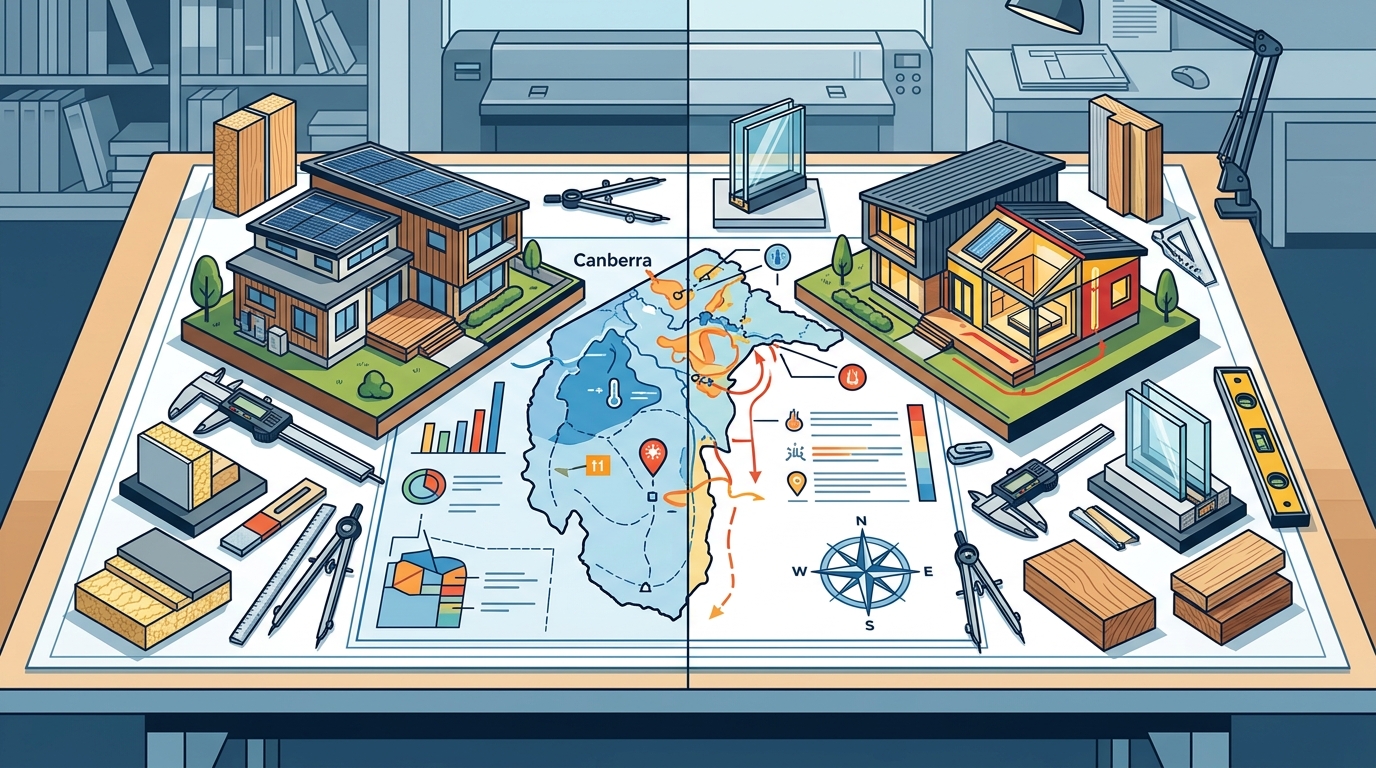
Ask to see examples of energy modeling reports from previous projects. High-performance design relies on software like PHPP (Passive House Planning Package) or similar dynamic simulation tools. These models predict energy use based on orientation, glazing ratios, and local weather data. If a specialist cannot provide a detailed energy model before construction begins, they are likely guessing rather than engineering.
3. Local Experience in the ACT
Canberra’s planning regulations and soil conditions are unique. A specialist with experience in the ACT understands the nuances of council approvals for high-performance homes. They also know which local suppliers can provide the specific high-performance materials required, such as triple-glazed windows and continuous insulation boards.
Design Philosophy and Methodology
Different sustainable design specialists approach the renovation process with varying philosophies. Some prioritize aesthetic integration first, treating energy efficiency as an add-on. Others, like those specializing in high-performance habitats, start with the physics of the building and let the design emerge from those constraints.
The "Envelope First" Approach
This methodology prioritizes the building envelope above all else. By maximizing insulation and eliminating thermal bridges, the home becomes a stable thermal mass. This approach often results in smaller, more efficient HVAC systems, which reduces upfront capital costs. It is particularly effective in Canberra, where the goal is to retain heat during long winters.
The "Net Zero Plus" Vision
Some specialists aim for Net Zero Plus, where the home generates more energy than it consumes. This requires a holistic view of the home as a power plant. It involves strategic solar orientation, high-efficiency appliances, and often battery storage. This philosophy is ideal for homeowners who want to achieve energy independence and contribute to grid stability.
Technology and Material Integration
The materials chosen for your renovation will dictate its embodied carbon and long-term durability. Comparing specialists involves looking at their material palettes and supply chain ethics.
Insulation and Airtightness
Standard fiberglass batts are often insufficient for high-performance renovations. Specialists in this field typically specify wood-fiber insulation or rigid mineral wool, which offer superior thermal and acoustic performance. The airtightness membrane is another critical component, acting as the barrier that prevents uncontrolled air leakage.
Glazing Strategies
Windows are the weakest link in the thermal envelope. In Canberra, triple-glazed windows with argon or krypton gas fills are often necessary to meet high-performance targets. Look for specialists who specify windows with low-emissivity coatings and warm-edge spacers. The KETO Project exemplifies this by using triple-glazed uPVC windows with AluClad finishes to achieve exceptional thermal performance.
Embodied Carbon Considerations
Sustainable design is not just about operational energy; it is also about the carbon emitted during construction. Specialists who prioritize low-carbon materials, such as cross-laminated timber (CLT) or recycled steel, are reducing the home’s long-term environmental impact. According to recent industry reports on building emissions, embodied carbon accounts for a significant portion of a building’s total lifecycle footprint.
Cost and Long-Term Value Analysis
One of the most common concerns for homeowners is the upfront cost of sustainable design. It is true that high-performance materials and specialized labor can increase initial construction costs by 5% to 15%. However, this comparison must be viewed through the lens of total cost of ownership.
Operational Savings
A well-designed sustainable home can reduce heating and cooling bills by up to 90%. In Canberra, where energy prices are subject to market fluctuations, this stability is invaluable. Over a 30-year mortgage period, the savings on energy bills can offset the initial premium entirely.
Resale Value and Marketability
As energy awareness grows, homes with verified high-performance ratings are becoming more desirable. Properties with Passive House certification or high NatHERS ratings often command a premium in the real estate market. They are marketed as low-maintenance, healthy, and future-proof assets.
Health and Comfort Premium
Beyond financial metrics, the health benefits of a sustainable home are significant. Improved indoor air quality, stable temperatures, and reduced noise pollution contribute to better well-being. These factors are increasingly valued by buyers and renters alike.
Key Takeaways
- Climate Specificity: Canberra’s extreme temperature swings require a building envelope that prioritizes airtightness and high R-value insulation over standard practices.
- Certification Matters: Verify that your design specialist holds active Passive House Designer certification, ensuring they have the technical expertise to deliver on performance promises.
- Modeling is Mandatory: Require dynamic energy modeling before construction begins to predict performance accurately and optimize design decisions.
- Material Integrity: Prioritize specialists who specify triple-glazed windows and continuous insulation systems to eliminate thermal bridging.
- Long-Term ROI: While upfront costs may be higher, operational savings and increased property value provide a strong return on investment over time.
- Health Benefits: High-performance homes offer superior indoor air quality and thermal comfort, directly impacting occupant health and well-being.
- Local Expertise: Choose a firm with proven experience in the ACT to navigate local regulations and supply chains effectively.
Frequently Asked Questions
What is the difference between a sustainable architect and a Passive House designer?
A sustainable architect may incorporate green features like solar panels or water tanks, but a Passive House designer focuses on the fundamental physics of the building envelope to minimize energy demand. Passive House design is a rigorous, certifiable standard, whereas sustainable design can be a broad, unregulated term.
How much does a sustainable home renovation cost in Canberra?
Costs vary based on the scope and materials, but high-performance renovations typically incur a 5-15% premium over standard builds. However, this is offset by significant reductions in heating and cooling costs over the life of the home.
Can I achieve Passive House standards in an existing Canberra home?
Yes, retrofitting an existing home to Passive House standards is possible. It involves upgrading insulation, replacing windows with triple-glazed units, and sealing air leaks. The process is more complex than new construction but yields similar performance benefits.
Why is airtightness so important in Canberra?
Canberra’s cold winters mean that heat loss through air leakage is a major source of energy waste. Airtightness prevents cold drafts and ensures that the heating system works efficiently, maintaining consistent indoor temperatures.
What is the role of energy modeling in sustainable design?
Energy modeling uses software to simulate how a building will perform under various conditions. It allows designers to test different materials and orientations before construction, ensuring the final design meets energy targets.
Are there government incentives for sustainable renovations in the ACT?
Yes, the ACT government offers various rebates and incentives for energy-efficient upgrades, including solar panel installations and battery storage. It is advisable to consult with your design specialist for the latest information on available schemes.
How do I choose the right specialist for my project?
Look for a firm with certified professionals, a strong portfolio of high-performance projects in the ACT, and a transparent approach to energy modeling and material selection. Schedule a consultation to discuss your specific goals and budget.
Next Steps for Your Renovation
Selecting the right sustainable design specialist is a pivotal decision that will shape your home’s performance for decades. By prioritizing technical expertise, rigorous energy modeling, and high-quality materials, you can ensure your renovation delivers both comfort and efficiency.
If you are ready to explore how high-performance design can transform your Canberra home, consider scheduling a consultation with a team of certified Passive House designers. Contact reimagined habitat today to discuss your project and discover how we can help you build a healthier, more efficient home.