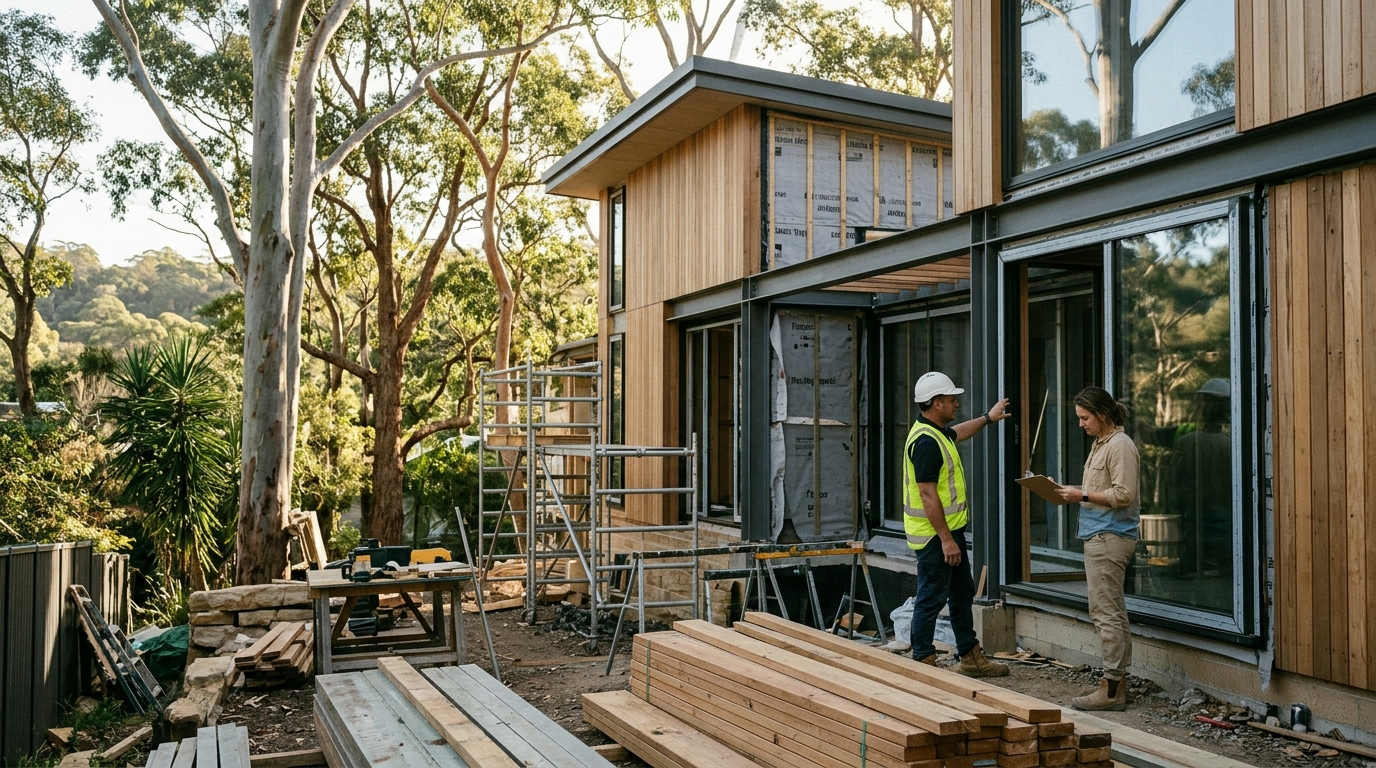
When selecting a passive house builder in Sydney, prioritize teams with certified Passive House experience, rigorous airtightness testing protocols, and a proven track record of delivering high-performance envelopes. You need a partner who understands the specific climatic challenges of the region, such as summer overheating and winter cold, and can integrate mechanical ventilation with heat recovery (MVHR) seamlessly. At reimagined habitat, we emphasize that the builder's technical capability is just as critical as the design, ensuring your home performs exactly as modeled.
Why Builder Competence Matters More Than Design
A perfect design on paper is useless if the construction team cannot execute the details. Passive House is a science-based approach to building design that prioritizes exceptional thermal comfort, airtightness, and high-performance ventilation. The gap between a standard home and a certified Passive House lies in the precision of the build. In Sydney, where humidity and temperature swings can be significant, small errors in sealing or insulation can lead to condensation, mold, and energy waste.
You must verify that your builder has specific experience with airtightness membranes and thermal bridge-free detailing. Many general builders are familiar with standard insulation but lack the training to install continuous air barriers correctly. Look for a team that treats the building envelope as a single, integrated system rather than a collection of separate components. This mindset ensures that the home remains comfortable and healthy year-round, without relying heavily on active heating or cooling systems.
Verifying Certification and Technical Training
Certification is the gold standard for validating a builder's skills. The Passive House Institute (PHI) offers specific training and certification for builders, ensuring they understand the rigorous requirements of the standard. When interviewing potential builders, ask if they hold or are pursuing Passive House builder certification. This credential demonstrates a commitment to ongoing education and adherence to best practices.
Furthermore, check if the builder works closely with certified Passive House designers. At reimagined habitat, our team includes Certified Passive House Designers who collaborate directly with construction teams. This collaboration ensures that the design intent is preserved during the build phase. A builder who respects the design process and communicates openly with the designer is far more likely to deliver a successful project. Avoid builders who view the design as a fixed set of drawings rather than a performance target to be achieved.
Assessing Airtightness Testing and Quality Control
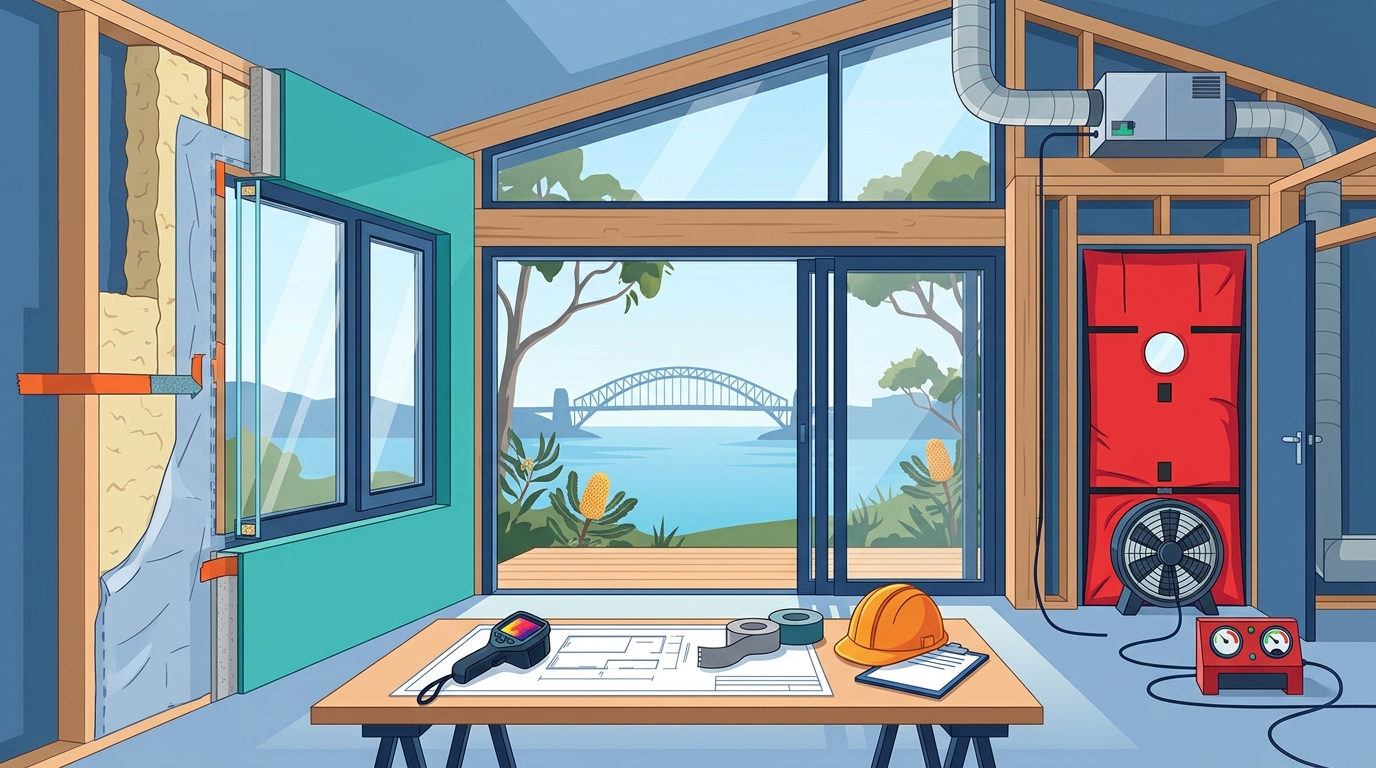
Airtightness is the backbone of a Passive House. It is the measure of how well the building envelope prevents uncontrolled air leakage. A certified Passive House must achieve an airtightness of 0.6 air changes per hour at 50 Pascals (ACH50). This is significantly tighter than standard Australian homes, which often leak much more air. Ask your builder how they plan to test and achieve this target. Do they use blower door testing at intermediate stages, or only at the end of the project?
Quality control during construction is equally important. A builder should have a dedicated person responsible for checking airtightness details, such as window installations, wall penetrations, and roof connections. In Sydney, the fast pace of construction can sometimes lead to shortcuts. A competent builder will schedule specific time for quality checks and will not proceed to the next stage until the previous one is verified. This proactive approach prevents costly fixes later and ensures the home meets its energy performance goals.
Understanding the Local Climate and Shading
Passive House principles were developed in Europe, but they must be adapted for the Australian climate. In Sydney, summer shading is a critical element that European designs often do not prioritize. A knowledgeable builder will understand the importance of external shading devices, such as eaves, pergolas, or louvers, to prevent solar heat gain during the warmer months. They will also consider the orientation of the home to maximize winter sun while blocking summer sun.
Additionally, the builder should be familiar with local building codes and planning regulations. Sydney has specific requirements for energy efficiency and sustainability that must be met. A builder who is well-versed in these regulations can help navigate the approval process and ensure that your home complies with all local standards. This expertise saves time and reduces the risk of delays or costly changes during the build. By choosing a builder who understands the local context, you ensure that your home is not only efficient but also practical and compliant.
Evaluating Communication and Project Management
Building a Passive House is a complex process that requires clear communication between the client, designer, and builder. You need a builder who provides regular updates, is transparent about costs, and is responsive to your questions. Poor communication is one of the most common causes of project failure. Look for a builder who uses project management tools to track progress and who is willing to involve you in key decision-making points.
At reimagined habitat, we emphasize regular progress reviews and budget checks throughout the design and construction process. This ensures that everyone is aligned and that any issues are addressed promptly. A builder who values communication will treat you as a partner in the project, not just a customer. This collaborative approach leads to a smoother build and a home that meets your expectations. When evaluating potential builders, ask for references from past clients and speak to them about the builder's communication style and problem-solving abilities.
Key Takeaways
- Look for builders with specific Passive House certification and training in airtightness detailing.
- Verify that the builder uses blower door testing at intermediate stages to ensure quality control.
- Ensure the builder understands the local Sydney climate, including the need for summer shading.
- Check if the builder collaborates closely with certified Passive House designers to preserve design intent.
- Assess the builder's communication style and project management approach to ensure transparency.
- Ask for references from past Passive House projects to verify their track record.
- Confirm that the builder is familiar with local building codes and planning regulations in Sydney.
Frequently Asked Questions
What is the difference between a standard builder and a Passive House builder?
A standard builder focuses on meeting minimum building codes, while a Passive House builder is trained to achieve specific performance targets, such as airtightness and thermal insulation. Passive House builders have specialized knowledge of building science and are certified to ensure the home performs as designed.
How much more does a Passive House cost to build in Sydney?
The cost premium for a Passive House in Australia is usually in the range of 5–15% more than a comparable standard home. However, this premium can be lower if Passive House principles are integrated from the early design stages. The long-term energy savings often offset the initial cost difference.
Do I need a certified designer if I have a certified builder?
Yes, a certified designer is essential for creating a design that meets Passive House standards. The designer uses specialized software to model the home's energy performance and ensure that the design is feasible for the builder to construct. The builder then executes the design with the necessary precision.
What is airtightness testing and why is it important?
Airtightness testing, or blower door testing, measures how much air leaks through the building envelope. It is crucial for Passive Houses because it ensures that the home is sealed tightly enough to maintain a stable indoor temperature and prevent moisture issues. Testing is usually done at the end of the build, but some builders test at intermediate stages.
Can any builder build a Passive House in Sydney?
Not all builders have the skills or experience to build a Passive House. You should look for builders who have specific training and certification in Passive House construction. They will have the knowledge to handle the detailed sealing and insulation requirements that are critical for the standard.
How does the Sydney climate affect Passive House design?
The Sydney climate requires careful consideration of summer shading and ventilation to prevent overheating. Passive House designs in Sydney often include external shading devices and mechanical ventilation with heat recovery to manage indoor temperatures effectively. This is different from European designs, which focus more on winter heat retention.
Next Steps for Your Project
Choosing the right builder is a critical step in creating a healthy, high-performance home. By focusing on certification, technical skills, and local climate expertise, you can ensure that your investment delivers the comfort and efficiency you expect. If you are ready to start your journey, contact our team to discuss your project and explore how we can help you achieve your goals.