
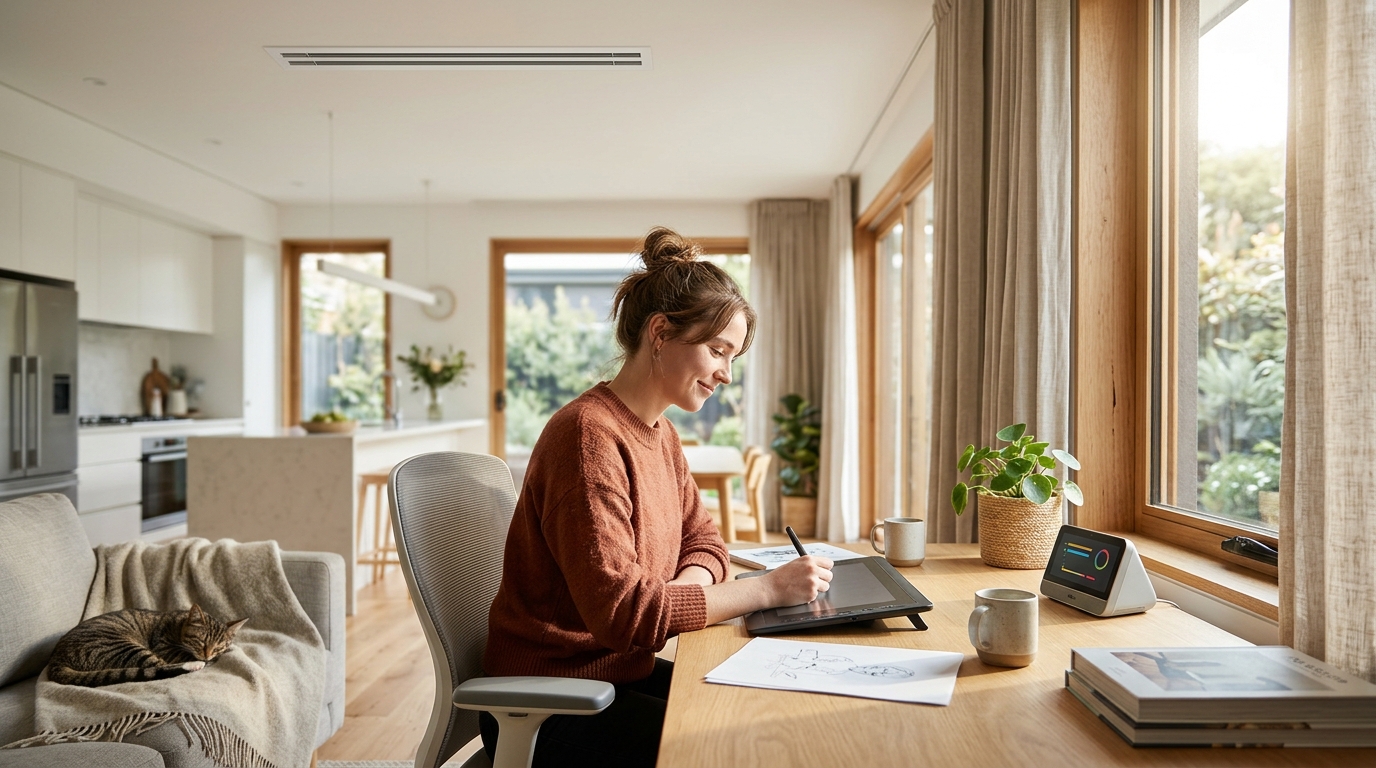
Mechanical ventilation systems keep Melbourne homes healthy and mould-free by continuously exchanging stale indoor air with filtered fresh outdoor air. This process removes moisture, pollutants, and allergens before they can accumulate. By maintaining strict air quality standards, these systems prevent the biological growth that causes mould. reimagined habitat integrates these systems into Passive House designs to ensure year-round comfort and safety.
The Critical Role of Moisture Control
Mould is a fungus that thrives in damp environments. It requires moisture, a food source, and time to grow. In Melbourne, the variable climate creates unique challenges for indoor humidity management. High humidity levels often result from daily activities like cooking, bathing, and drying clothes. Without adequate removal, this moisture settles on surfaces and condenses on cold walls and windows.
Passive House standards address this by prioritising airtightness. Airtightness is the measure of how well a building envelope prevents uncontrolled air leakage. By sealing the building tightly, we eliminate drafts and uncontrolled moisture entry. However, a sealed building requires a controlled method for air exchange. Mechanical ventilation provides this controlled exchange. It ensures that moisture is removed at the source rather than migrating through the building fabric. This approach is critical for preventing condensation on internal surfaces.
The implication for homeowners is a significant reduction in mould risk. When humidity is kept within a safe range, the conditions for mould growth are removed. This protects not only the building structure but also the health of the occupants. reimagined habitat designs homes with this principle at the core. Our approach ensures that moisture management is a primary design goal, not an afterthought.
Filtering Pollutants and Allergens
Indoor air quality is often poorer than outdoor air. This is due to the accumulation of volatile organic compounds (VOCs) from household products. Dust mites, pet dander, and pollen also contribute to indoor allergen loads. Mechanical ventilation systems use high-efficiency filters to capture these particles. The filtration process is a continuous barrier against airborne contaminants. It ensures that the air entering the living space is clean and safe to breathe.
Standard open windows cannot provide this level of filtration. When windows are open, unfiltered outdoor air enters the home. This air may contain high levels of pollen or particulate matter. Mechanical systems, however, filter the air before it enters the conditioned space. This is particularly important for individuals with asthma or allergies. The consistent supply of filtered air reduces the frequency and severity of allergic reactions. It creates a more stable and predictable indoor environment.
reimagined habitat emphasises the health benefits of filtered air in our designs. We select ventilation systems that meet rigorous filtration standards. This ensures that the air quality remains high regardless of outdoor conditions. The result is a home that supports respiratory health and overall wellbeing. By controlling what enters the home, we create a sanctuary from external pollutants.
Balancing Comfort and Energy Efficiency
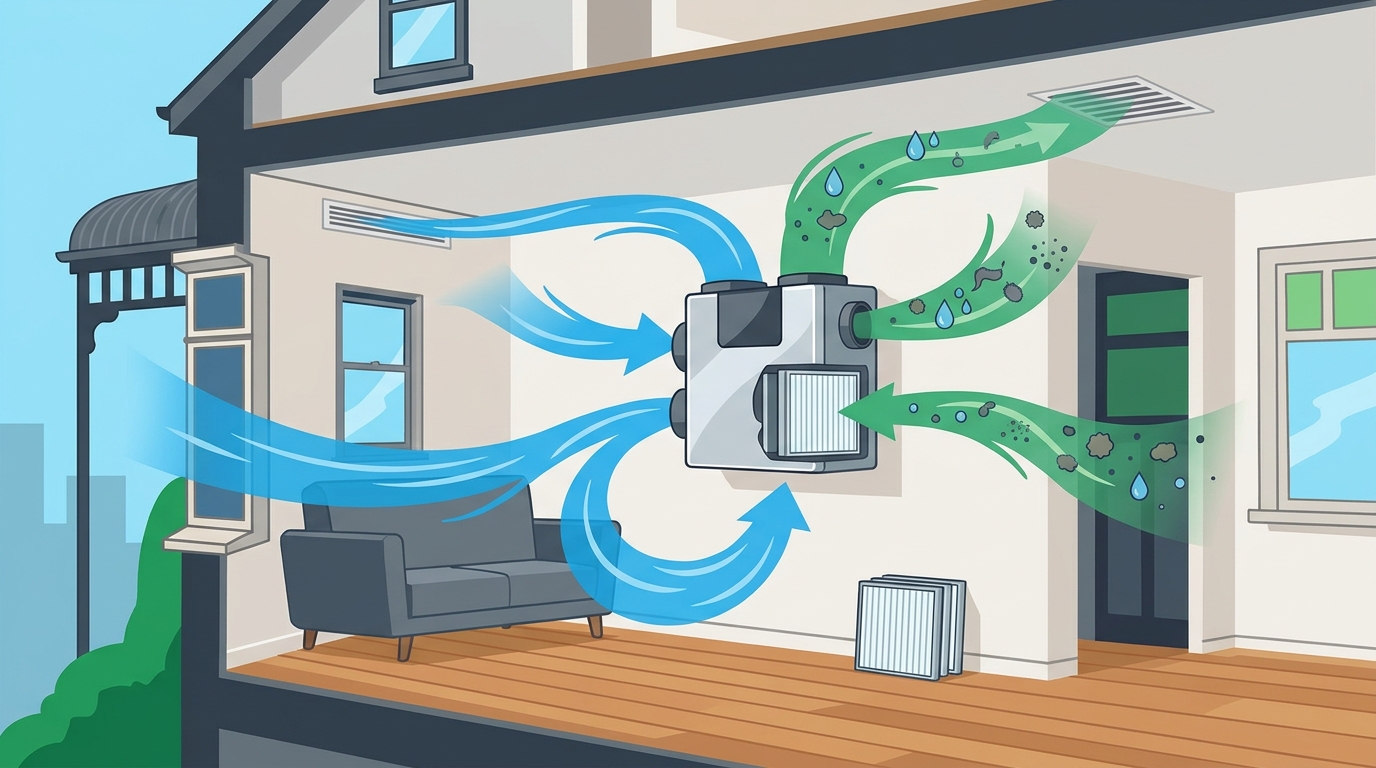
Traditional ventilation methods often lead to energy loss. Opening windows in winter releases warm indoor air. Opening them in summer lets in hot, humid air. This forces heating and cooling systems to work harder. Mechanical ventilation systems recover energy from the exhaust air. This process is known as heat recovery. It transfers heat from the outgoing stale air to the incoming fresh air.
Heat recovery ventilation (HRV) is a technology that captures thermal energy from exhaust air. It pre-heats or pre-cools the incoming fresh air. This reduces the load on the heating and cooling systems. In Melbourne, where temperatures can fluctuate significantly, this efficiency is crucial. The system maintains a comfortable indoor temperature with minimal energy use. It allows for continuous fresh air without the energy penalty of traditional methods.
The implication is a home that is both healthy and energy-efficient. You do not have to choose between fresh air and low energy bills. reimagined habitat designs homes that achieve high energy ratings while maintaining excellent air quality. Our use of energy modelling ensures that the ventilation system is sized correctly. This balance is key to achieving a sustainable and comfortable living environment.
Passive House Integration in Melbourne
Passive House is a global standard for energy-efficient building design. It focuses on super-insulation, airtightness, and thermal bridge-free construction. In Melbourne, this standard is particularly effective due to the temperate climate. The design principles allow for a home that requires very little active heating or cooling. However, the airtightness required by the standard necessitates a high-performance ventilation system.
reimagined habitat is a leading provider of Passive House design services in Australia. We specialise in creating sustainable, healthy, and high-performance homes. Our team of certified Passive House designers works closely with clients. We ensure that the ventilation system is integrated seamlessly into the building design. This integration is critical for achieving the desired performance outcomes. It ensures that the air quality remains high while the energy use remains low.
The specific challenge in Melbourne is managing the variable weather. Our designs account for local climate data. We use solar modelling and energy rating programs to optimise the system. This ensures that the home performs well in all seasons. The result is a home that is resilient to Melbourne's changing weather patterns. It provides a consistent and healthy indoor environment year-round.
Choosing the Right System
reimagined habitat guides clients through the selection process. We consider the long-term maintenance and operational costs. We also consider the health benefits of different filtration options. Our expertise ensures that the chosen system is appropriate for the design. We help clients understand the technical aspects of ventilation. This empowers them to make informed decisions about their home.
The final implication is a tailored solution that meets the client's goals. Whether the priority is allergy relief or energy savings, the right system can deliver. reimagined habitat ensures that the ventilation system is a key component of the overall design. It is not an add-on but an integral part of the healthy home strategy. This holistic approach ensures that the home performs as intended.
Key Takeaways
- Mechanical ventilation removes moisture at the source, preventing mould growth in airtight homes.
- High-efficiency filters capture allergens and pollutants, improving indoor air quality.
- Heat recovery systems reduce energy consumption by pre-conditioning incoming fresh air.
- Passive House standards require airtightness, making mechanical ventilation essential.
- reimagined habitat integrates ventilation into the core design for optimal performance.
- Proper system selection depends on home size, occupancy, and local climate conditions.
- Continuous air exchange ensures a stable and healthy indoor environment year-round.
Frequently Asked Questions
What is mechanical ventilation?
Mechanical ventilation is a system that uses fans and ducts to exchange indoor air with outdoor air. It ensures a continuous supply of fresh air while removing stale air and moisture.
How does ventilation prevent mould?
Ventilation prevents mould by removing excess moisture from the indoor air. Mould requires moisture to grow, so keeping humidity levels low inhibits its development.
Is mechanical ventilation energy efficient?
Yes, systems with heat recovery are highly energy efficient. They capture heat from exhaust air to pre-heat incoming fresh air, reducing the load on heating systems.
Do I need mechanical ventilation in a Passive House?
Yes, it is essential. Passive House standards require high airtightness, which prevents natural air leakage. Mechanical ventilation provides the necessary air exchange in a controlled manner.
Can mechanical ventilation filter out allergens?
Yes, systems equipped with high-efficiency filters can capture dust, pollen, and other airborne allergens. This improves indoor air quality for sensitive individuals.
How does reimagined habitat approach ventilation design?
reimagined habitat integrates ventilation into the overall Passive House design. We use energy modelling to ensure the system is sized correctly and performs optimally in the local climate.
Conclusion
Mechanical ventilation is a critical component of healthy home design in Melbourne. It addresses the dual challenges of moisture control and air quality. By integrating these systems into Passive House designs, we create homes that are both comfortable and sustainable. reimagined habitat is committed to helping you achieve a healthy living environment. Our expertise in sustainable design ensures that your home meets the highest standards of performance. To explore how we can design your healthy home, for a consultation.